

Commercial HVAC Maintenance Checklist for Perth Businesses
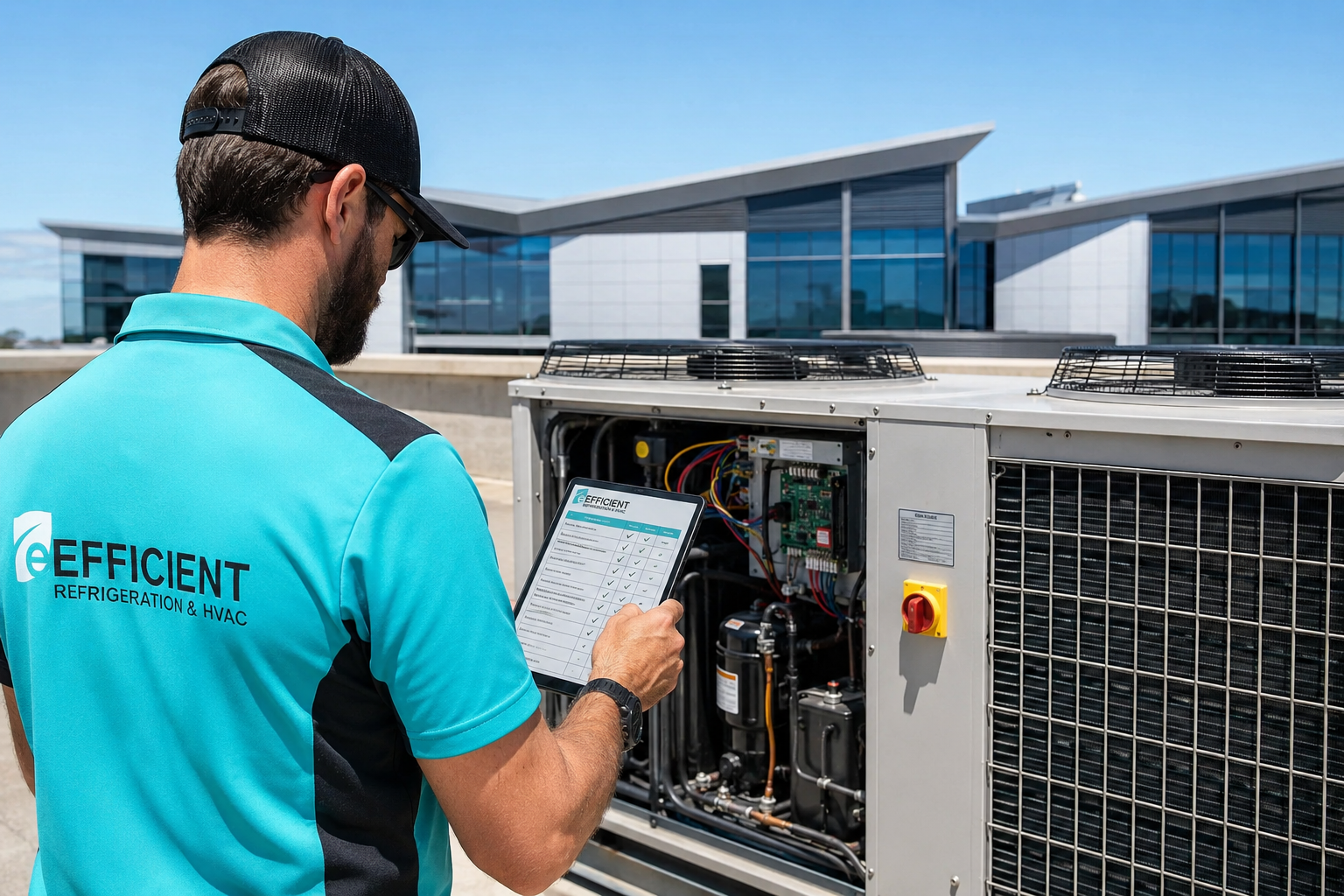
Commercial HVAC Maintenance Checklist for Perth Businesses is essential for businesses that rely on reliable heating, ventilation, and air conditioning. Offices, shopping centers, warehouses, hotels, hospitals, restaurants, retail stores, industrial facilities, and data centers all depend on well maintained HVAC systems to support comfortable and productive environments.
Commercial HVAC systems are essential to the daily operation of many businesses across Perth. When these systems are properly maintained, they can operate more efficiently, provide consistent indoor comfort, and help reduce unexpected breakdowns.
However, commercial HVAC equipment works hard throughout the year. Perth’s hot summers can increase cooling demand, while dust, debris, coastal conditions, and continuous operating hours can place additional stress on equipment.
For facility managers and business owners, regular maintenance is therefore more than a routine task. It is an important part of protecting business operations.
The Australian Government notes that HVAC can account for a significant share of energy use in commercial buildings, making good maintenance and optimization an important opportunity to reduce energy consumption and operating costs.
A structured commercial HVAC maintenance checklist for Perth businesses can help facility teams identify routine maintenance requirements, record issues, and determine when professional servicing is needed.
Why Commercial HVAC Maintenance Matters
A commercial HVAC system can contain many interconnected components. Filters, coils, fans, motors, compressors, controls, drains, electrical components, and ventilation equipment all need to work together for the system to perform correctly.
When one component begins to deteriorate, the effect can spread to other parts of the system.
For example, a blocked filter can restrict airflow. The system may then need to operate for longer periods to maintain the desired temperature. Increased operating time can place additional stress on components and increase energy consumption.
Similarly, dirty condenser coils can reduce heat transfer and make the refrigeration system work harder.
Regular maintenance helps identify these problems before they develop into larger and more expensive failures.
Commercial HVAC Maintenance Checklist
A maintenance checklist provides a simple way to organize inspections and keep track of the condition of your HVAC equipment.
The exact maintenance requirements will depend on the type of system, manufacturer recommendations, building conditions, operating hours, and the environment in which the equipment operates.
However, most commercial HVAC maintenance programs should consider the following areas.
1. Inspect the Overall HVAC System
Start with a general inspection of the HVAC equipment.
Look for visible damage, unusual operating conditions, excessive vibration, unusual noises, or unusual odors.
Technicians should also review previous service records and outstanding faults.
The inspection should consider:
- Overall equipment condition
- Unusual noises or vibration
- Visible damage
- Equipment access and clearances
- Previous maintenance issues
- Outstanding repair recommendations
- Equipment identification and service records
Keeping accurate records makes it easier to identify recurring problems and monitor equipment performance over time.
2. Check Air Filters and Airflow
Air filters are one of the simplest components to inspect, but they can have a significant effect on HVAC performance.
As filters collect dust and airborne particles, airflow can become restricted.
Blocked filters can increase system strain and reduce cooling performance. Regular filter inspection and replacement can therefore help maintain airflow and system efficiency.
The maintenance checklist should include:
- Inspecting air filters
- Cleaning or replacing filters when required
- Checking supply air paths
- Checking return air paths
- Inspecting vents and grilles
- Checking for restricted airflow
- Assessing airflow balance
Filter requirements will vary depending on the system, building use, and environmental conditions.
Facilities exposed to high levels of dust may require more frequent attention.
3. Inspect and Clean HVAC Coils
Evaporator and condenser coils play an important role in heat transfer.
When dirt and debris accumulate on coils, heat transfer can become less effective. This can reduce system performance and increase the amount of energy required to maintain indoor temperatures.
The Australian Government specifically identifies coil cleaning as an important HVAC maintenance activity for energy efficiency.
A commercial HVAC inspection should therefore consider:
- Evaporator coil condition
- Condenser coil condition
- Dust and debris accumulation
- Coil cleanliness
- Airflow across the coils
- Signs of corrosion or deterioration
Outdoor condenser coils may require particular attention in Perth and other WA environments where dust, debris, and coastal exposure can affect equipment.
4. Check Fans, Motors and Belts
Fans and motors are essential for moving air through commercial HVAC systems.
A problem with a fan motor, belt, bearing, or associated component can reduce airflow and affect overall system performance.
Maintenance inspections should check for:
- Unusual motor noise
- Excessive vibration
- Worn belts
- Belt tension where applicable
- Fan condition
- Motor condition
- Signs of excessive wear
Identifying mechanical wear early can help prevent unexpected equipment failure.
5. Inspect the Refrigeration System
Commercial refrigeration and air conditioning systems rely on correctly operating refrigeration circuits.
Maintenance should include appropriate checks of system performance, operating pressures, refrigerant circuit condition, compressors, and potential signs of leakage.
Refrigerant-related work should only be performed by appropriately qualified and authorized technicians.
In Western Australia, refrigeration and air-conditioning maintenance and repair can involve electrical work that must be carried out within the appropriate licensing scope.
6. Check Electrical Components and Controls
Electrical and control systems play an important role in commercial HVAC reliability.
Maintenance professionals should inspect relevant components within their authorized scope and check that controls and protective devices operate correctly.
The checklist should consider:
- Controls
- Thermostats
- Sensors
- Protective devices
- Accessible electrical connections
- Control settings
- Fault indicators
Any electrical work must be carried out by appropriately licensed personnel within the applicable scope.
7. Inspect Condensate Drains
Condensate drainage is another important part of HVAC maintenance.
When air conditioning operates, moisture can be removed from the air. This moisture needs to drain correctly.
Blocked or poorly functioning drains can result in water leaks, overflow, moisture damage, and other building problems.
Maintenance should therefore include:
- Checking condensate drains
- Inspecting drain trays
- Clearing blockages where appropriate
- Checking for leaks
- Inspecting surrounding areas for moisture damage
- Confirming correct drainage
Moisture management is particularly important in buildings where humidity and condensation can create indoor environmental problems. WA Government guidance for northern regions specifically addresses condensation management in air-conditioned buildings.
8. Check for Dust and Environmental Exposure
Perth and other parts of Western Australia can expose commercial HVAC systems to dust and airborne debris.
Outdoor equipment can also be exposed to harsh weather and, in coastal locations, salt-laden air.
During maintenance, technicians should consider:
- Dust accumulation
- Outdoor coil condition
- Corrosion
- Debris around equipment
- Equipment exposure
- Air intake condition
- Clearance around outdoor units
The maintenance frequency may need to be adjusted according to the building’s location and operating environment.
9. Review HVAC Energy Performance
Maintenance is not only about preventing breakdowns.
It is also an opportunity to identify equipment that is consuming more energy than expected.
Facility managers can review energy consumption, operating hours, temperature settings, system schedules, and recurring performance issues.
The Australian Government recommends good maintenance and system optimization as part of a broader strategy for improving commercial HVAC efficiency.
A maintenance review can identify opportunities such as:
- Adjusting operating schedules
- Optimizing temperature settings
- Improving airflow
- Cleaning coils
- Replacing inefficient components
- Repairing mechanical faults
- Improving controls
These improvements can help reduce unnecessary HVAC energy consumption while maintaining indoor comfort.
10. Keep Accurate Maintenance Records
A commercial HVAC maintenance program should always include proper documentation.
Records help facility managers understand when equipment was serviced, what faults were identified, what repairs were completed, and which issues still require attention.
A useful maintenance record should include:
- Service date
- Equipment inspected
- Technician details
- Faults identified
- Repairs completed
- Parts replaced
- Recommendations
- Next service date
The WA Government also provides building maintenance logbook guidance for recording building-related works and maintenance information.
Good records make it easier to plan future servicing and identify recurring equipment problems.
Download Your Commercial HVAC Maintenance Checklist
Want an easier way to keep track of your HVAC maintenance?
We’ve created a practical Commercial HVAC Maintenance Checklist for Perth Businesses that facility managers and business owners can download and use as part of their maintenance planning.
The checklist covers key areas including filters, airflow, coils, refrigeration systems, controls, drainage, environmental exposure, energy performance, safety, and maintenance records.
Download the Free Commercial HVAC Maintenance Checklist
Use it alongside your equipment manufacturer’s maintenance requirements and your professional HVAC service program.
Why Preventative Maintenance Is Better Than Waiting for a Breakdown
Waiting until an HVAC system stops working can create significant disruption.
A breakdown may occur during peak operating hours or during periods of extreme heat when cooling demand is highest.
Businesses may then face:
- Emergency repair costs
- Equipment downtime
- Uncomfortable indoor conditions
- Disruption to employees
- Customer complaints
- Potential damage to temperature-sensitive equipment
- Lost productivity
Preventative maintenance takes a different approach.
Instead of waiting for equipment to fail, businesses can identify developing problems and address them during planned service visits.
This makes maintenance easier to schedule and can reduce the likelihood of unexpected interruptions.
How Often Should Commercial HVAC Systems Be Serviced?
There is no single maintenance schedule that applies to every commercial HVAC system.
Service frequency depends on several factors, including:
- Equipment type
- Building size
- Operating hours
- Cooling demand
- Environmental conditions
- Dust exposure
- Coastal exposure
- System criticality
- Manufacturer recommendations
A busy facility operating HVAC equipment continuously may require more frequent attention than a small office with limited operating hours.
The best approach is to develop a maintenance schedule based on the equipment and operating conditions of the specific facility.
Protect Your Commercial HVAC Investment
A commercial HVAC system is a significant investment, and regular maintenance helps protect that investment.
For Perth businesses, a structured maintenance program can improve reliability, support energy efficiency, maintain indoor comfort, and reduce the risk of unexpected breakdowns.
At Efficient Refrigeration & HVAC, we provide commercial HVAC maintenance and servicing for businesses across Perth and Western Australia.
Our maintenance programs are tailored to the equipment, building, operating conditions, and requirements of each facility.
If your business depends on reliable heating, cooling, and ventilation, preventative maintenance can help keep your HVAC system operating efficiently and reliably throughout the year.
Download the Free Commercial HVAC Maintenance Checklist