


How to Cut Commercial HVAC Energy Costs
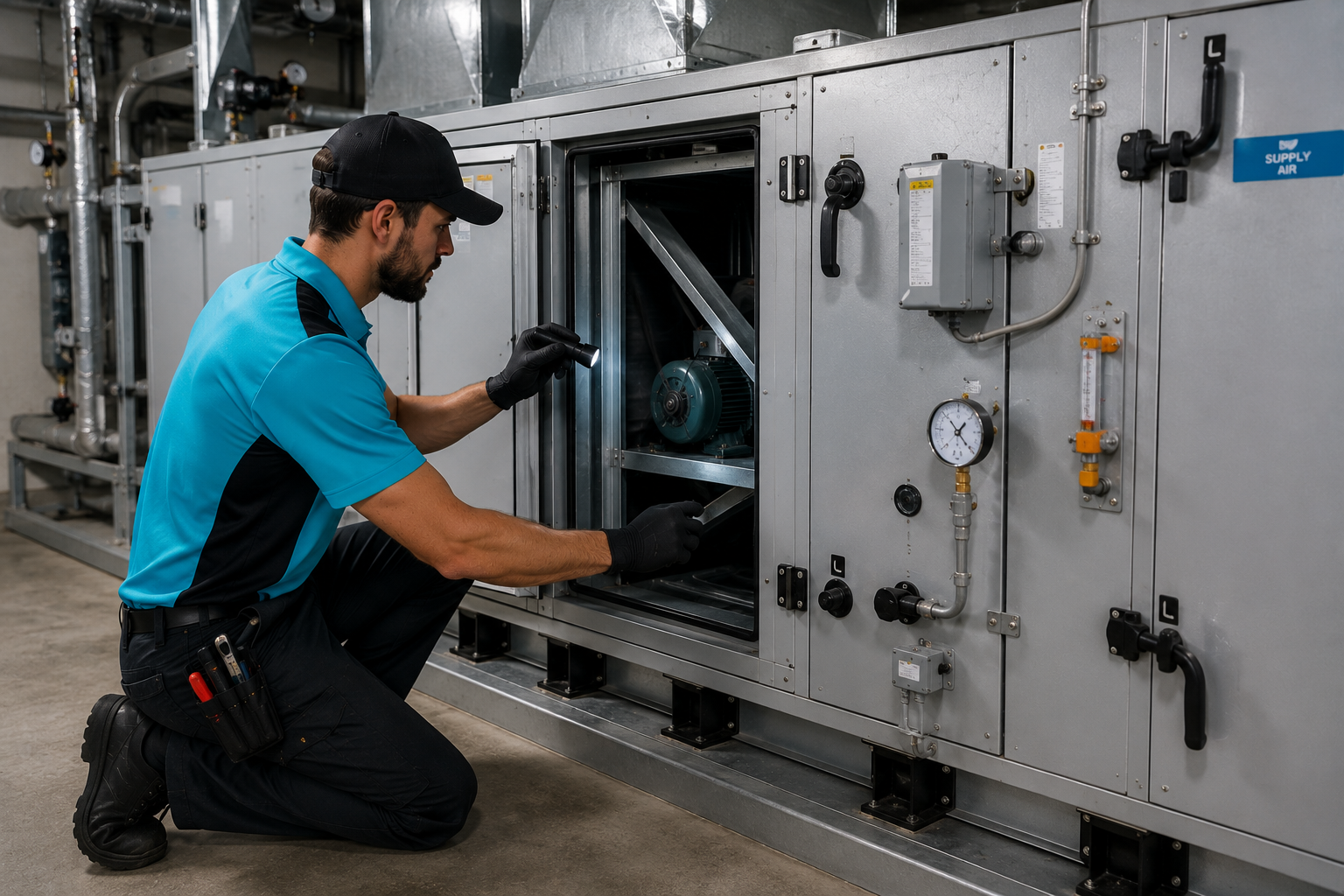 Understanding how to cut commercial HVAC energy costs is important for businesses looking to control operating expenses. Heating, cooling and ventilation systems often run for long hours to maintain comfortable and safe conditions across offices, hotels, hospitals, retail facilities, warehouses, restaurants and industrial buildings.
For businesses in Perth and across Western Australia, efficient HVAC operation is particularly important during periods of high cooling demand. Long operating hours, high occupancy and demanding commercial environments can place additional pressure on HVAC equipment and increase energy consumption.
The good news is that reducing commercial HVAC energy costs does not always require a complete system replacement. Regular maintenance, better temperature control, improved airflow, smarter operating schedules and targeted equipment upgrades can all help improve HVAC efficiency.
Why Commercial HVAC Energy Costs Matter
An inefficient HVAC system can consume more energy than necessary while providing less reliable temperature control. For businesses, this can quickly increase commercial HVAC energy costs, especially when systems operate for long hours.
Several factors can contribute to higher commercial HVAC energy costs, including dirty filters, blocked coils, poor airflow, incorrect temperature settings, outdated controls, refrigerant problems, inefficient chillers and equipment that operates longer than necessary.
Small efficiency problems can also become more expensive over time. A poorly maintained air conditioning system, for example, may need to run for longer periods to achieve the required indoor temperature. This increases energy consumption and can place additional stress on components.
Taking a proactive approach to HVAC maintenance and system performance can help businesses control commercial HVAC energy costs before minor efficiency issues lead to higher operating expenses, unexpected breakdowns or premature equipment replacement.
1. Start With Regular Commercial HVAC Maintenance
One of the most practical ways to reduce commercial HVAC energy costs is to keep the system properly maintained.
Commercial HVAC equipment operates under demanding conditions. Dust, dirt, restricted airflow and component wear can gradually reduce system efficiency.
Regular maintenance allows technicians to inspect the equipment, identify developing faults and keep critical components operating as intended.
Maintenance may include inspecting filters, coils, fans, belts, electrical components, controls and other system components. Depending on the type of equipment, technicians may also assess refrigerant performance and overall system operation.
A well maintained HVAC system can operate more efficiently and provide more consistent performance.
Preventative maintenance also helps businesses avoid relying on emergency repairs after equipment has already failed.
For commercial properties, this is particularly important because an HVAC breakdown can affect staff, customers, tenants, stock, equipment and daily operations.
2. Optimize Commercial HVAC Temperature Settings
Temperature settings have a direct impact on HVAC energy consumption.
Setting the system significantly colder or warmer than necessary can increase the amount of energy required to maintain indoor conditions.
Businesses should establish practical temperature settings based on the building, occupancy, operating requirements and relevant workplace conditions.
Avoid constantly changing temperature settings throughout the day unless there is a genuine operational reason.
A stable and properly managed temperature strategy can help reduce unnecessary HVAC operation while maintaining suitable indoor conditions.
It is also important to consider different areas of a commercial building separately. Offices, meeting rooms, warehouses and customer areas may have different occupancy patterns and cooling requirements.
Zoning and appropriate controls can help prevent energy being used to condition areas that do not require the same level of heating or cooling.
3. How to Cut Commercial HVAC Energy Costs With Smarter Operating Schedules
Commercial HVAC systems do not necessarily need to operate at full capacity throughout the entire day. Reviewing operating schedules is a practical way to cut commercial HVAC energy costs without compromising comfort or building requirements.
Operating schedules should reflect when a building is occupied and when heating or cooling is actually required. For example, a system operating for several hours before employees arrive may consume energy without providing a meaningful benefit.
Similarly, HVAC equipment that continues operating at normal capacity after a building has closed can increase unnecessary energy consumption. Adjusting schedules to match occupancy and operating hours can help reduce this waste.
A regular review of HVAC schedules can identify opportunities to improve efficiency, reduce unnecessary operation and lower commercial HVAC energy costs.
Businesses should consider:
- Building opening and closing times
- Occupancy patterns
- Weekend operations
- Public holidays
- Seasonal changes
- Areas with limited occupancy
Automated scheduling through building management systems can make these adjustments easier to manage.
4. Improve Airflow and Ventilation
Poor airflow can make an HVAC system work harder.
Blocked filters, dirty coils, damaged ductwork, incorrect fan settings and other airflow problems can reduce system performance.
When conditioned air cannot move effectively through a building, the HVAC system may operate for longer periods to achieve the desired indoor temperature.
Regular inspection and maintenance can help identify airflow restrictions.
Filters should also be maintained according to the equipment requirements and operating environment. Commercial buildings exposed to high levels of dust or contaminants may require particular attention.
Ventilation should also be reviewed carefully.
The goal is not simply to reduce ventilation to save energy. Commercial buildings require appropriate ventilation for indoor air quality and occupant requirements. Instead, ventilation systems should be correctly designed, maintained and controlled so that they operate efficiently while meeting building needs.
5. Use BMS and Smart HVAC Controls
Building management systems, commonly known as BMS, can provide businesses with greater control over HVAC operation.
A BMS can monitor and manage equipment according to factors such as temperature, occupancy, schedules and system demand.
This can help prevent equipment from operating unnecessarily.
For larger commercial facilities, smart controls can also provide visibility into how different HVAC systems are performing.
Facility managers can use this information to identify unusual operating patterns, areas of excessive energy consumption and equipment that may require attention.
Advanced controls can be particularly valuable for buildings with complex HVAC systems, multiple zones or central plant equipment.
Instead of relying entirely on manual adjustments, businesses can use automation to manage HVAC operation more efficiently.
6. Check the Efficiency of Your HVAC Equipment
The condition and efficiency of HVAC equipment can have a major effect on commercial HVAC energy costs.
Older or poorly maintained equipment may consume more energy than newer, properly configured systems.
Businesses should periodically assess the performance of major HVAC equipment rather than waiting until a failure occurs.
This is particularly important for large commercial systems such as chillers, cooling towers, air handling units and central plant equipment.
A professional assessment can help identify whether equipment is operating efficiently and whether repairs, maintenance or upgrades could improve performance.
For example, a chiller that is not operating correctly may consume more energy while delivering less effective cooling.
Identifying this issue early can help businesses determine whether maintenance or a more significant upgrade is the appropriate solution.
7. Reduce Heat Gain Inside Your Building
The amount of heat entering a commercial building can influence how hard the HVAC system needs to work.
Windows, roofs, doors, lighting, equipment and occupants can all contribute to internal heat gain.
During hot weather, solar heat entering through windows can increase the cooling load.
Businesses can reduce unnecessary heat gain by considering measures such as suitable shading, window treatments, efficient lighting and appropriate building insulation.
Internal equipment can also contribute significant heat.
Computers, commercial kitchen equipment, machinery and other electrical equipment release heat into the building. Where practical, reducing unnecessary equipment operation can reduce the cooling demand placed on the HVAC system.
Reducing the cooling load can help commercial HVAC equipment operate more efficiently.
8. Consider Energy Efficient HVAC Upgrades
Maintenance should always be considered first, but some commercial HVAC systems may eventually require upgrades. If equipment is outdated, inefficient or approaching the end of its useful service life, continuing to repair it may not always provide the best long term result.
Energy efficient HVAC upgrades can include modern air conditioning equipment, high efficiency chillers, advanced controls, improved BMS integration and other technologies designed to reduce energy consumption. These upgrades can help businesses cut commercial HVAC energy costs while improving system performance and reliability.
However, equipment should not be replaced simply because newer technology is available. A proper assessment should consider the building’s requirements, existing equipment, operating hours, maintenance history, energy consumption and expected return on investment.
For large commercial facilities, upgrading one component of the HVAC system may also affect other parts of the system. Professional planning is therefore important before major HVAC upgrades are undertaken, helping businesses choose solutions that deliver practical long term energy savings.
9. Monitor Your HVAC Energy Performance
You cannot effectively manage commercial HVAC energy costs without understanding how your system is performing.
Businesses should monitor energy consumption and look for changes over time.
Unexpected increases in energy use may indicate changes in occupancy, operating schedules, equipment performance or system efficiency.
Where BMS and energy monitoring systems are available, facility managers can use this data to identify trends and investigate unusual performance.
It is also useful to compare energy consumption against factors such as building occupancy and seasonal cooling demand.
The goal is not simply to achieve the lowest possible energy consumption.
The goal is to maintain the required indoor environment while using energy as efficiently as practical.
When Should You Upgrade Your Commercial HVAC System?
Knowing when to repair, maintain or replace HVAC equipment can be difficult.
An upgrade may be worth considering when a system is experiencing frequent breakdowns, rising maintenance costs, declining performance or consistently high energy consumption.
Age alone should not determine whether equipment needs to be replaced.
Instead, businesses should consider the overall condition and performance of the system.
Important questions include:
Is the equipment reliable?
Are energy costs increasing?
Are repair costs becoming difficult to justify?
Can the system meet the building’s current requirements?
Are suitable replacement components still available?
Would modern controls improve system performance?
Would an upgrade provide a reasonable return on investment?
A professional HVAC assessment can help answer these questions before a business commits to a major capital investment.
A Practical Approach to Reducing Commercial HVAC Energy Costs
Reducing energy costs does not have to happen through one major project.
Businesses can start with the basics.
First, make sure the HVAC system is properly maintained.
Next, review temperature settings and operating schedules.
Then, check airflow, controls and equipment performance.
For larger facilities, consider BMS optimization and energy monitoring.
Finally, assess whether inefficient or ageing equipment should be upgraded.
This staged approach can help businesses identify relatively simple improvements before investing in major equipment replacement.
It can also help facility managers build a longer term HVAC efficiency strategy.
Conclusion
How to cut commercial HVAC energy costs depends on much more than the equipment itself. Maintenance, operating schedules, temperature settings, airflow, controls, building conditions and overall equipment efficiency all play an important role.
For businesses in Perth and across Western Australia, taking a proactive approach can help reduce unnecessary energy consumption while supporting reliable HVAC performance.
Regular commercial HVAC maintenance should be the starting point. From there, businesses can assess controls, operating practices, equipment condition and potential upgrades to identify further opportunities to improve efficiency.
The right approach will depend on the building, HVAC system and operational requirements. By understanding where energy is being used and addressing inefficiencies early, businesses can take practical steps to cut commercial HVAC energy costs while maintaining reliable system performance.
Reduce Commercial HVAC Energy Costs With Efficient Refrigeration & HVAC
Efficient Refrigeration & HVAC provides commercial HVAC services for businesses across Western Australia.
Our team works with commercial HVAC systems, maintenance, repairs, chillers, BMS controls and HVAC equipment to help businesses maintain reliable and efficient building services.
If your commercial HVAC system is consuming more energy than expected, experiencing performance issues or approaching the end of its service life, a professional assessment can help identify the next step.
Looking for practical ways to improve your HVAC system? Read our commercial HVAC maintenance for essential maintenance tasks that can improve system efficiency, reduce energy waste and help prevent unexpected breakdowns.