
Why Is My Commercial Air Conditioner Not Cooling Properly?
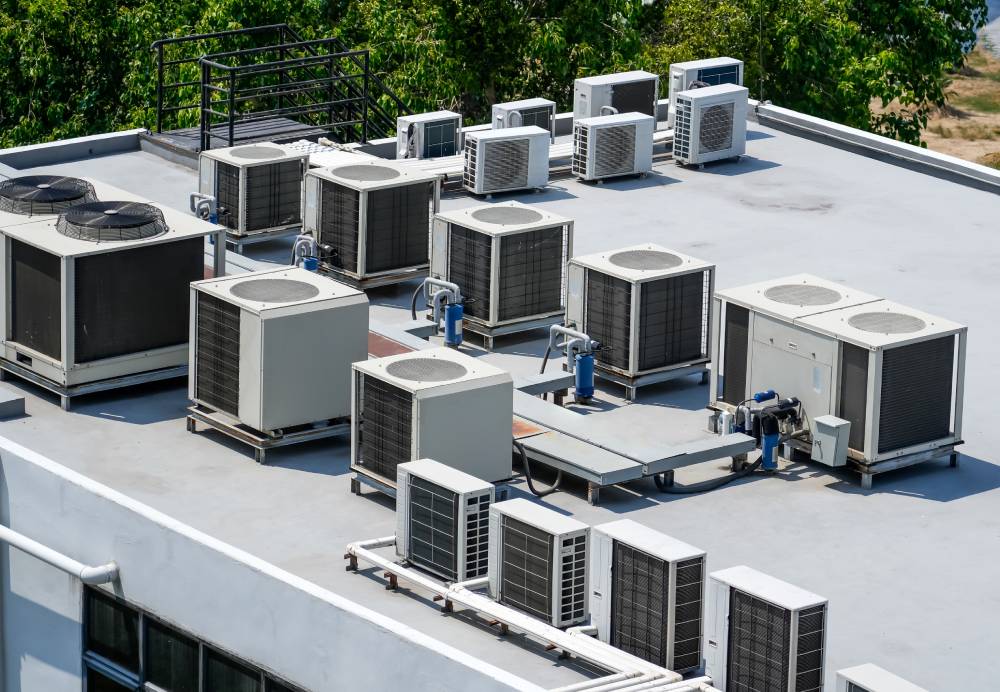 A commercial air conditioner not cooling properly can quickly become a major concern for any business. When a cooling system cannot maintain a comfortable indoor temperature, it can affect employees, customers, tenants, equipment and daily operations.
There are many possible reasons for poor cooling performance. The problem could be as simple as a blocked filter or restricted airflow. It could also indicate a refrigerant issue, faulty controls, a mechanical problem or ..
Finding the cause early is important. A small performance issue can become a costly repair if it is left unresolved.
1. Dirty or Blocked Air Filters
One of the first things to check when a commercial air conditioner is not cooling properly is the air filter.
Air filters collect dust and other particles as air passes through the system. Over time, this build-up can restrict airflow and make it harder for the system to deliver cool air.
When airflow is restricted, the air conditioner may need to operate for longer to reach the desired temperature. This can increase energy consumption and place additional strain on the equipment.
Commercial buildings can also place different demands on HVAC filters. A busy restaurant, warehouse or industrial facility may require more frequent attention than a small office.
Regular filter inspection and replacement should therefore be part of a planned commercial HVAC maintenance program.
2. Restricted Airflow
Clean filters do not always mean that airflow is adequate. Other parts of the system can also restrict the movement of conditioned air.
Blocked supply outlets, dirty coils, damaged ductwork, faulty fans and incorrect damper settings can all reduce airflow.
Poor airflow may be noticeable when some areas of a building feel comfortable while others remain warm. You may also notice weak airflow from certain vents or find that the system runs for long periods without achieving the desired temperature.
A professional HVAC inspection can help identify where the restriction is occurring and determine the appropriate solution.
3. Dirty Evaporator or Condenser Coils
Coils are essential to the cooling process.
The evaporator coil absorbs heat from the indoor air, while the condenser coil releases that heat outside. If either coil becomes heavily contaminated with dirt or debris, heat transfer can become less effective.
As a result, the system may struggle to provide the required cooling.
Outdoor condenser units can be particularly exposed to dust and debris. Regular inspection and cleaning can help maintain proper heat transfer and support efficient operation.
If your system has gradually become less effective, dirty coils may be one of the factors worth investigating.
4. Low Refrigerant or a Refrigerant Leak
A refrigerant problem can also affect commercial cooling performance.
Refrigerant plays a central role in the cooling cycle. If the system has lost refrigerant because of a leak, it may no longer be able to remove heat effectively.
You might notice that the system runs for longer than usual but the building still feels warm. Ice may also appear on certain components, although this is not always present.
A refrigerant issue should not be treated simply by adding more refrigerant. The system needs to be checked to determine why the refrigerant level has changed.
Refrigeration work should be carried out by an appropriately licensed technician who can locate the problem and make the necessary repairs.
5. Faulty Thermostats and Temperature Sensors
Your commercial HVAC system depends on accurate temperature information.
Thermostats and sensors tell the system when cooling is required and help determine how the equipment should operate. If a sensor is inaccurate or a controller develops a fault, the system may not respond as expected.
This can lead to uneven temperatures, unnecessary cooling or rooms that remain warmer than they should.
Larger commercial buildings can have even more complex control systems. Multiple zones may be connected to a BMS, with sensors and controllers working together to manage temperatures throughout the building.
A fault within this control network can affect one area or several zones.
6. Fan or Motor Problems
Fans help move air through commercial HVAC systems. If a fan motor begins to fail, airflow can decrease and cooling performance may suffer.
A mechanical problem may also produce unusual sounds, vibrations or inconsistent airflow.
In some cases, the system may continue running even though the fan is no longer operating at the required level. This can make the problem difficult to identify without a proper inspection.
Because commercial HVAC equipment combines electrical and mechanical components, suspected fan or motor faults should be assessed by a qualified technician.
7. Compressor Problems
The compressor is one of the most important components in a refrigeration system.
It helps circulate refrigerant through the cooling cycle. If the compressor develops a mechanical or electrical fault, the system may run without producing sufficient cooling.
Compressor problems can have several causes. Electrical faults, component wear, refrigerant issues and poor system conditions can all contribute.
Replacing the compressor without identifying the underlying cause may not solve the problem permanently. Proper diagnosis should come first so the most appropriate repair can be determined.
8. Electrical and Control Faults
Commercial air conditioning systems rely on electrical components to operate fans, compressors, controls and other equipment.
A faulty component, damaged connection or control problem can interfere with normal operation. The system may shut down unexpectedly, fail to start or repeatedly trip a breaker.
If this happens, avoid repeatedly resetting the equipment. Doing so may temporarily restore operation without addressing the underlying fault.
Electrical problems should be investigated by appropriately qualified professionals, particularly where larger commercial HVAC equipment and electrical loads are involved.
9. Lack of Regular Commercial HVAC Maintenance
Sometimes, the reason a commercial air conditioner is not cooling properly comes down to a lack of preventative maintenance.
Commercial HVAC systems contain many components that need to work together. Filters become dirty, coils accumulate debris and mechanical components gradually wear. Sensors and controls can also develop faults over time.
Without regular servicing, these issues may go unnoticed until system performance starts to decline.
Preventative maintenance provides an opportunity to identify developing problems before they become major failures. It can also help businesses maintain more consistent cooling performance and improve equipment reliability.
For businesses operating in Perth and across Western Australia, a planned commercial HVAC maintenance program can be especially valuable during periods of high cooling demand.
10. The HVAC System May Be Undersized
Not every cooling problem is caused by a fault.
In some buildings, the HVAC system may simply no longer have enough capacity to meet current cooling requirements.
A building’s cooling needs can change over time. Occupancy may increase, new equipment may be installed or the internal layout may be changed. Even changes in how a space is used can affect the cooling load.
An undersized system may run continuously and still struggle to maintain the required temperature.
If your air conditioner appears to be operating normally but cannot keep up with demand, a professional assessment can determine whether the issue is related to equipment performance, system capacity or the building’s current cooling load.
How Can Western Australia’s Climate Affect Commercial Air Conditioning?
Western Australia’s climate can place considerable demand on commercial cooling systems.
During periods of high temperatures, air conditioners must remove more heat from buildings. This becomes even more challenging when a property has large windows, high occupancy, heat-producing equipment or significant exposure to direct sunlight.
Perth businesses may therefore notice cooling problems becoming more obvious during periods of extreme heat.
This is one reason why commercial HVAC equipment should be inspected and maintained before periods of heavy cooling demand. Identifying a developing fault early can reduce the risk of losing cooling when the system is working hardest.
What Can You Check When Your Commercial Air Conditioner Is Not Cooling?
There are a few simple things a facility manager or business operator can observe before arranging professional assistance.
First, check that the controller is set to the correct cooling mode and temperature.
Next, check whether accessible filters appear heavily blocked. If the manufacturer provides specific instructions for filter inspection, follow those instructions.
You can also check whether cool air is reaching the affected areas and whether anything is visibly obstructing accessible outdoor equipment.
Pay attention to when the problem occurs. Does it affect the entire building, or only one room or zone? Does the system work normally in the morning but struggle during the afternoon?
These observations can give an HVAC technician useful information when diagnosing the problem.
However, businesses should not attempt to repair refrigerant, electrical or complex mechanical faults themselves.
When Should You Call a Commercial HVAC Technician?
Professional assistance is recommended when the cooling problem continues after basic checks or when there are signs of a more serious fault.
You should arrange an HVAC inspection if:
- The system runs continuously but the building remains warm.
- Cooling performance has suddenly decreased.
- Some areas are much warmer than others.
- The system repeatedly shuts down or trips.
- Ice appears on components.
- You notice unusual noises or vibrations.
- Energy consumption has increased unexpectedly.
- The same cooling problem keeps returning.
- The equipment is becoming increasingly expensive to maintain.
A technician can assess the system as a whole rather than simply treating the most obvious symptom.
This is particularly important in larger commercial buildings, where one faulty component can affect multiple zones or connected systems.
Can Regular Commercial HVAC Maintenance Prevent Cooling Problems?
Regular maintenance cannot prevent every HVAC fault, but it can help identify many problems before they become serious.
A maintenance program can include inspections of filters, coils, fans, electrical components, controls, drainage and other system-specific components.
It also gives technicians an opportunity to identify changes in performance.
For example, a system that takes longer to cool a building than it used to may be showing an early sign of declining performance. Investigating the change early may prevent a more serious failure later.
Preventative maintenance can therefore support more than indoor comfort. It can help businesses improve reliability, manage operating costs and reduce the risk of unexpected HVAC downtime.
How to Prevent Commercial Cooling Problems
The best time to address an HVAC problem is before it becomes an emergency.
Businesses can take several practical steps to support reliable cooling:
- Schedule regular commercial HVAC maintenance.
- Keep filters clean and replace them when required.
- Make sure supply and return air paths are not obstructed.
- Monitor unusual changes in temperature or airflow.
- Check HVAC controls and operating schedules.
- Keep outdoor equipment clear of obvious obstructions.
- Monitor energy consumption for unexpected increases.
- Arrange professional inspections when performance changes.
These steps can help facility managers identify problems earlier and keep commercial cooling systems operating more reliably.
Final Thoughts
When a commercial air conditioner is not cooling properly, there can be several possible causes. The issue may involve airflow, filters, coils, refrigerant, controls, fans, electrical components, the compressor or the overall capacity of the system.
The important thing is to identify the underlying cause rather than simply treating the symptoms.
Regular maintenance and early professional diagnosis can help businesses avoid unnecessary downtime and more expensive repairs.
For Perth and Western Australian businesses, keeping commercial air conditioning systems properly maintained is particularly important when cooling demand is high.
Commercial Air Conditioning Repairs and Maintenance in Perth
If your commercial air conditioner is running but not cooling properly, Efficient Refrigeration & HVAC can assess the system and help identify the cause.
We provide commercial HVAC services across Western Australia, including commercial air conditioning maintenance, repairs, HVAC controls, chiller services and other commercial HVAC solutions.
Whether you are dealing with poor cooling, inconsistent temperatures or an ageing system, professional assessment can help determine the right solution.
If your commercial air conditioner is not cooling properly, regular maintenance can help identify problems early. Read our Commercial HVAC Maintenance Checklist 2026 for practical tips to keep your system running efficiently.