
 Commercial HVAC Christmas Preparation: How to Prevent Holiday Breakdowns
Commercial HVAC Christmas Preparation is essential for businesses across Western Australia as the festive season approaches. Christmas is one of the busiest periods of the year for many businesses. Shopping centres experience increased foot traffic, hotels accommodate more guests, restaurants handle higher demand and supermarkets work hard to keep refrigerated products at the correct temperatures. During this period, reliable commercial HVAC and refrigeration systems are essential to maintaining comfortable environments, protecting perishable products and keeping business operations running smoothly.
Commercial HVAC Christmas preparation should be a priority for businesses that depend on consistent cooling, ventilation and temperature control. A system failure during the holiday period can affect staff comfort, customer experience, product storage and daily operations. It can also create unexpected repair costs when maintenance teams, suppliers and spare parts may be less readily available.
With summer temperatures placing additional pressure on commercial cooling equipment, preparing before Christmas can help businesses identify developing faults, address maintenance issues and reduce the risk of unexpected disruption.
For commercial property managers and business operators, the objective is straightforward: make sure essential HVAC and refrigeration equipment is ready for the demands of the holiday season.
Why Christmas Is a Critical Period for Commercial HVAC Systems
Commercial HVAC systems often operate under demanding conditions throughout the year. However, the combination of summer heat, increased building occupancy and changing operating schedules can create additional pressure during the Christmas period.
In Western Australia, high outdoor temperatures can increase the cooling load on commercial air conditioning systems. Equipment may need to operate for longer periods to maintain comfortable indoor conditions, particularly in buildings with large windows, high occupancy or heat generating equipment.
The impact can be greater in facilities that experience increased activity during December.
For example, shopping centres may need to maintain comfortable temperatures across large public areas while managing higher customer numbers. Hotels may experience increased occupancy, placing additional demand on air conditioning and hot water systems. Restaurants and supermarkets also rely on refrigeration equipment that must operate consistently, regardless of public holidays.
A system that has been operating with an unresolved fault may struggle when demand increases.
This is why commercial HVAC Christmas preparation should begin before the holiday period. Identifying problems early gives businesses more time to arrange maintenance, organise repairs and confirm that critical equipment is operating as intended.
The Risks of an HVAC Breakdown During the Holiday Season
Commercial HVAC Christmas preparation is important because an unexpected HVAC failure can affect more than indoor comfort. Depending on the type of business and the equipment involved, the consequences can extend to operations, revenue, equipment performance and customer confidence.
Disruption to Business Operations
For many commercial facilities, air conditioning is essential to daily operations. A failure in a shopping centre, hotel, restaurant or office building can make parts of the premises uncomfortable or difficult to use.
In some environments, poor temperature control may affect staff productivity and customer experience. Businesses may also need to restrict access to certain areas until the problem is resolved.
Increased Pressure on Maintenance Budgets
Emergency repairs can be more expensive than planned maintenance. Faults that could have been identified during a routine inspection may develop into larger equipment problems if left unresolved.
During Christmas and New Year, arranging technicians, replacement components and specialist support may also require additional coordination.
Refrigeration and Product Storage Risks
For supermarkets, restaurants and food related businesses, refrigeration reliability is particularly important.
A refrigeration failure can cause temperatures to rise beyond acceptable operating conditions. This may put stored products at risk and require businesses to follow their food safety procedures.
Commercial refrigeration equipment should therefore be included in holiday preparation, not treated as a separate concern from the wider mechanical services strategy.
Reduced Comfort and Customer Confidence
Customers expect comfortable conditions when visiting commercial premises. Poor cooling during a busy trading period can affect how long people remain in a building and their overall experience.
For hotels, retail stores and hospitality businesses, maintaining suitable indoor conditions is an important part of delivering a reliable service.
Five Areas to Check Before Christmas
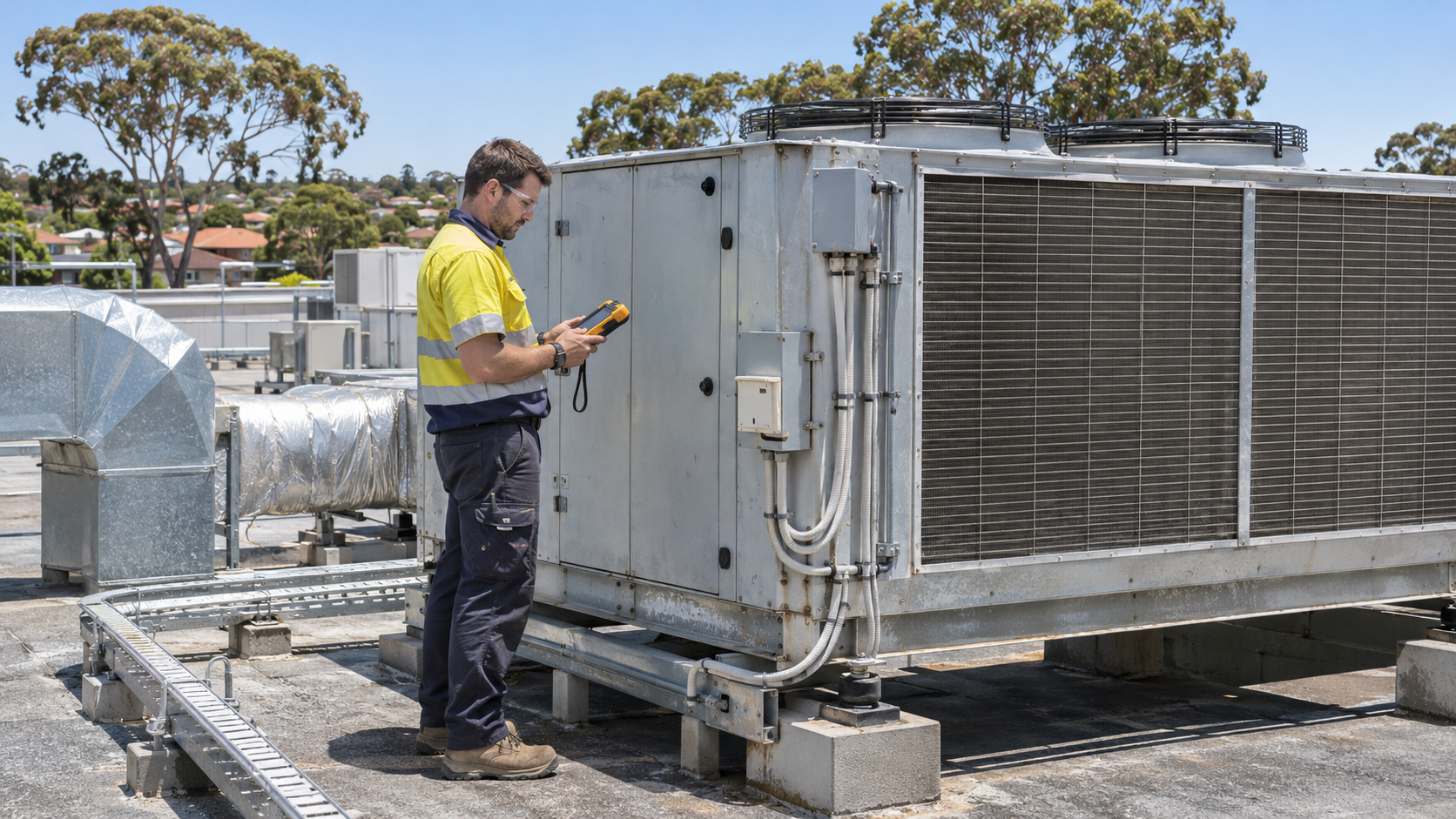 A pre Christmas HVAC inspection should consider the complete system rather than focusing only on whether the air conditioning is producing cool air.
The condition of individual components, control settings and supporting equipment can all affect overall performance.
1. Chillers and Central Cooling Equipment
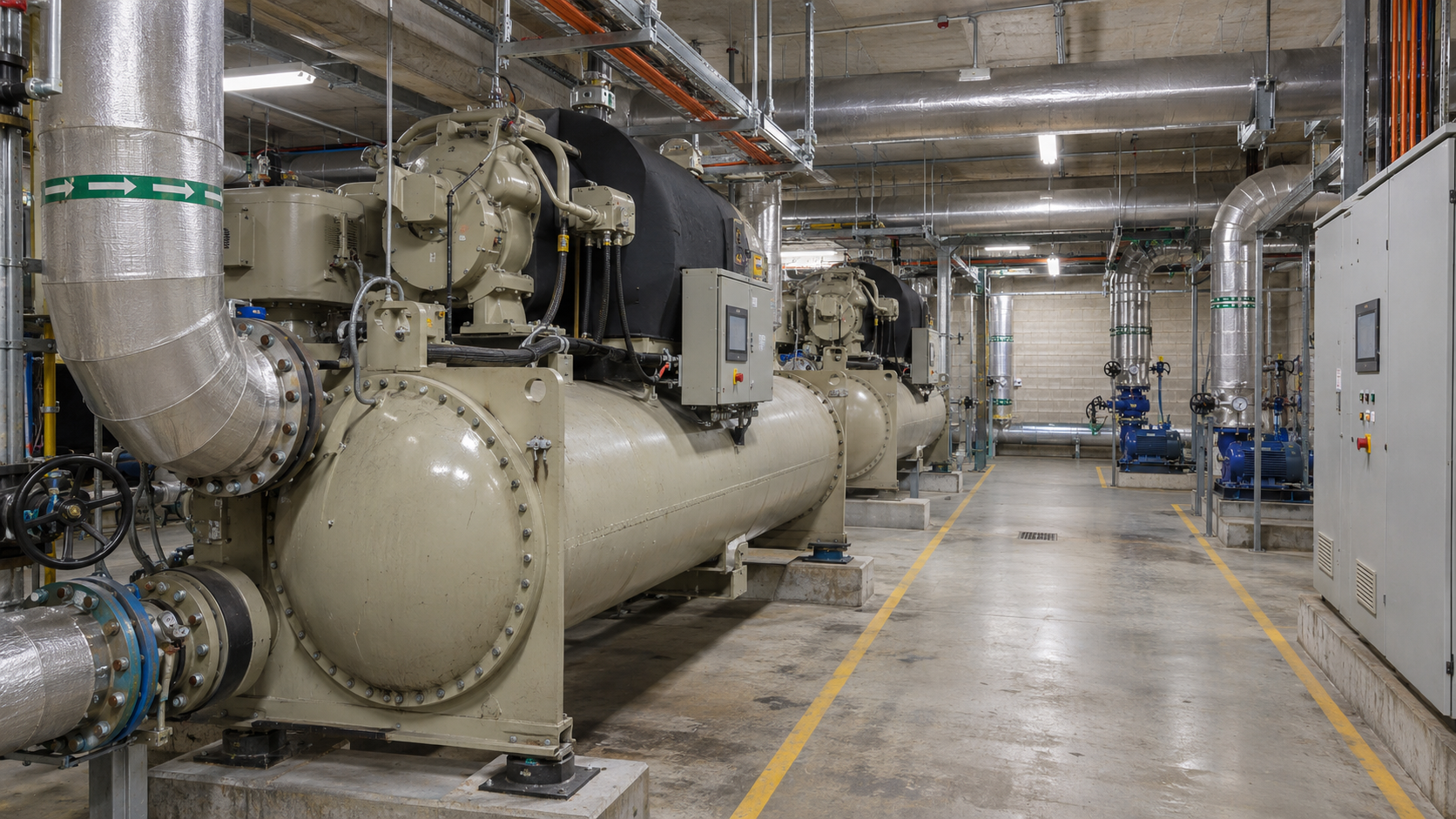 Chillers are central to the cooling operation of many large commercial buildings. They supply chilled water to air handling units and other cooling equipment, helping maintain indoor temperatures across extensive areas.
Before Christmas, businesses operating chilled water systems should consider the condition and performance of their chillers.
Important areas to review include:
- Chiller operating performance and alarm history.
- Compressor condition and operating parameters.
- Refrigerant circuit performance.
- Condenser and evaporator condition.
- Chilled water flow and temperature.
- Pumps, valves and associated pipework.
- Control settings and operating schedules.
A chiller may continue operating while its performance gradually deteriorates. Rising operating temperatures, unusual noise, repeated alarms or increased energy consumption can indicate that further investigation is needed.
Addressing these issues before the holiday period can help reduce the likelihood of an unexpected interruption when cooling demand is high.
Businesses operating large or specialist cooling installations should consider engaging experienced commercial chiller technicians. ERES provides specialist commercial chiller services across a range of chiller technologies and applications.
2. Air Handling Units, Filters and Airflow
Air handling units play an important role in distributing conditioned air throughout commercial buildings.
Restricted airflow can reduce cooling performance and place additional pressure on fans, motors and other system components. Dirty filters, blocked coils and poorly maintained fans can all affect the ability of an air handling unit to deliver the required airflow.
Before Christmas, maintenance teams should review:
- Air filter condition and replacement requirements.
- Cooling coil cleanliness.
- Fan and motor operation.
- Belt condition and tension where applicable.
- Condensate drainage.
- Airflow across occupied areas.
- Unusual vibration or operating noise.
Airflow problems can sometimes be mistaken for a lack of cooling capacity. Checking the condition of the air handling equipment helps identify whether the issue is related to airflow, heat transfer or another part of the system.
3. Commercial Refrigeration Systems
Commercial refrigeration is particularly important for supermarkets, restaurants, hotels and food service businesses.
As part of Commercial HVAC Christmas Preparation, refrigeration equipment deserves particular attention because it often needs to operate continuously to maintain product temperatures. A failure during the Christmas period can therefore create immediate operational concerns.
Businesses should review the condition of:
- Refrigeration compressors.
- Condensers and evaporators.
- Refrigerant pipework.
- Temperature controllers and sensors.
- Door seals and cabinet closures.
- Defrost systems.
- Condensate drainage.
- Refrigeration alarms and monitoring systems.
Temperature records should also be reviewed to identify unusual fluctuations or recurring problems.
If a refrigeration system has been struggling to maintain its required temperature, it should be investigated before the holiday period. Waiting until equipment fails can leave businesses with limited time to organise repairs and manage affected stock.
4. Building Management Systems and HVAC Controls
Building Management Systems help operators monitor and control mechanical services across commercial facilities.
A BMS can provide useful information about equipment operation, temperature conditions, alarms and system schedules. However, the quality of this information depends on accurate sensors, appropriate control settings and correctly functioning equipment.
Before Christmas, businesses should review their HVAC control systems to confirm that:
- Operating schedules reflect actual building requirements.
- Temperature sensors provide reliable readings.
- Equipment alarms are visible and appropriately configured.
- Chiller and pump sequences operate as intended.
- Air handling units respond correctly to control signals.
- Holiday operating schedules have been checked.
- Critical alarms can be identified and escalated.
Incorrect schedules can cause equipment to operate unnecessarily or fail to provide cooling when required.
For buildings with reduced occupancy during the Christmas shutdown, operating schedules may need adjustment. However, changes should be made carefully. Essential ventilation, cooling, refrigeration and equipment protection requirements must still be maintained.
5. Pumps, Fans and Electrical Components
Supporting mechanical and electrical equipment is just as important as the main cooling plant.
A problem with a pump, fan, motor or electrical component can affect the performance of an otherwise serviceable HVAC system.
Maintenance inspections should consider pump operation, motor condition, electrical connections, control panels, variable speed drives and any unusual operating noise or vibration.
Where variable speed drives are installed, technicians should also check for alarms and confirm that the equipment responds correctly to its control requirements.
Identifying these issues before Christmas can help prevent a relatively small component fault from disrupting a larger cooling installation.
Do Not Overlook Rising Energy Consumption
An increase in commercial HVAC energy consumption can be an early indication that a system is not operating efficiently.
When cooling demand increases during summer, businesses may naturally use more energy. However, an unexplained rise in consumption may point to underlying performance issues.
Common causes include dirty heat exchange surfaces, restricted airflow, incorrect control settings, faulty sensors, inefficient equipment operation and developing mechanical faults.
For example, a chiller operating with poor heat transfer may need to work harder to meet the required cooling load. Similarly, air handling units with restricted filters can experience reduced airflow and increased fan demand.
Reviewing energy consumption before Christmas can help identify unusual operating patterns.
Building operators should compare current performance with previous periods while considering changes in occupancy, operating hours and outdoor temperatures. This provides a more useful picture than looking at energy consumption in isolation.
Where a problem is identified, further investigation can determine whether maintenance, control adjustments or equipment repairs are required.
Preparing HVAC Systems for Christmas Shutdowns
Not every commercial facility operates at full capacity throughout Christmas and New Year.
Some offices close for several days, while other businesses continue operating with reduced staffing. Shopping centres, hotels, supermarkets, hospitals and industrial facilities may maintain normal or extended operating hours.
These differences make it important to review HVAC schedules before the holiday period.
Review Operating Hours
Building operators should confirm which areas will remain occupied and which areas will be closed.
HVAC schedules can then be reviewed to reflect actual building requirements. This may help avoid unnecessary operation in unoccupied spaces while ensuring occupied areas receive suitable cooling and ventilation.
Identify Equipment That Must Remain Operational
Some systems must continue operating even when a building is closed.
This may include refrigeration equipment, essential ventilation, critical cooling systems and equipment that requires specific environmental conditions.
Shutdown arrangements should clearly identify which equipment must remain operational and who is responsible for monitoring it.
Confirm Alarm Monitoring and Escalation Procedures
A building that is closed over Christmas still needs an appropriate response process for critical HVAC and refrigeration alarms.
Businesses should confirm who receives system notifications, who is responsible for assessing an alarm and how maintenance support can be arranged if a fault occurs.
A clear escalation process can reduce delays when an equipment problem develops outside normal business hours.
Avoid Unplanned Control Changes
Changing BMS schedules or equipment settings immediately before a holiday shutdown without proper checks can create unnecessary risks.
Any changes should be reviewed, tested and documented. Operators should also understand how to restore normal operating schedules when the business reopens.
Why Preventative Maintenance Matters Before the Holiday Period
Preventative maintenance helps businesses identify developing equipment problems before they result in unexpected failures.
Rather than waiting for a breakdown, planned servicing allows technicians to inspect equipment, assess performance and recommend corrective work where necessary.
For commercial HVAC systems, this may include checking refrigeration circuits, cleaning heat exchange surfaces, inspecting electrical components, reviewing control operation and assessing the condition of pumps and fans.
Maintenance records are also valuable. They help technicians understand previous faults, recurring issues, equipment condition and outstanding recommendations.
A structured maintenance programme should consider the requirements of the complete mechanical system, including chillers, air handling units, pumps, ventilation equipment and associated controls.
Businesses can review ERES’s commercial HVAC maintenance and service capabilities to understand how planned servicing supports equipment reliability and long term performance.
For a practical overview of equipment checks, our commercial HVAC maintenance checklist also provides a useful reference for reviewing system condition and maintenance requirements.
What Should Businesses Do If an HVAC System Fails During Christmas?
Even with appropriate preparation, equipment faults can still occur. When a system fails, the priority should be to protect people, products and business operations while arranging a suitable technical assessment.
The first step is to establish the nature of the problem.
Building operators should check the BMS for active alarms, review available temperature readings and identify which areas or equipment have been affected. They should also note any unusual sounds, visible leaks, loss of airflow or changes in system performance.
Where refrigeration equipment is involved, businesses should follow their established food safety procedures and monitor affected product temperatures.
Operators should avoid repeatedly resetting equipment or changing control settings without understanding the cause of the fault. Doing so may make diagnosis more difficult or allow an underlying problem to continue.
The next step is to contact an appropriately qualified commercial HVAC or refrigeration service provider.
Providing clear information about the equipment, alarms, operating conditions and symptoms can help technicians assess the situation and determine the next steps.
Businesses should also have access to relevant equipment details, maintenance records and site access arrangements before the holiday period begins.
Preparing for a Reliable Western Australian Summer
Christmas preparation should form part of a wider summer maintenance strategy.
Commercial HVAC systems across Western Australia may experience extended operating hours and increased cooling demand during hot weather. Dust, environmental conditions, building occupancy and equipment age can also influence system performance.
A maintenance approach that considers these operating conditions can help businesses make better decisions about their mechanical assets.
For facilities with large chilled water installations, this may involve reviewing chiller performance, heat rejection equipment, pump operation and control sequences.
For retail and hospitality businesses, attention may also be required across air handling units, ventilation systems and refrigeration equipment.
The most effective preparation is based on the actual requirements of the building. A shopping centre, hotel, supermarket and industrial facility will not have identical cooling demands or operating risks.
This is why inspections and maintenance recommendations should reflect the equipment installed, the condition of the system and the consequences of equipment failure.
Get Your Commercial HVAC System Ready Before Christmas
An unexpected HVAC or refrigeration failure during Christmas can create avoidable pressure for businesses, particularly when cooling demand is high and normal maintenance arrangements may be affected by public holidays.
Commercial HVAC Christmas preparation gives businesses an opportunity to identify developing problems, review operating schedules and address maintenance requirements before the holiday period begins.
Efficient Refrigeration & HVAC provides commercial HVAC, refrigeration and specialist chiller services across Perth and Western Australia. Our experience with commercial cooling equipment and complex mechanical installations supports businesses that depend on reliable building services.
Whether you manage a shopping centre, hotel, supermarket, industrial facility or commercial building, preparing your HVAC system before Christmas can help protect operations and support reliable performance throughout summer.
Do not wait for a breakdown to expose an existing problem. Arrange a commercial HVAC maintenance assessment before the Christmas period.
Contact Efficient Refrigeration & HVAC on 1300 189 336 or email service@eres.net.au to discuss your commercial HVAC maintenance requirements.
Visit Efficient Refrigeration & HVAC to learn more about our commercial HVAC and refrigeration services.