
Chiller Plant Optimisation: Improving Efficiency in Commercial Buildings
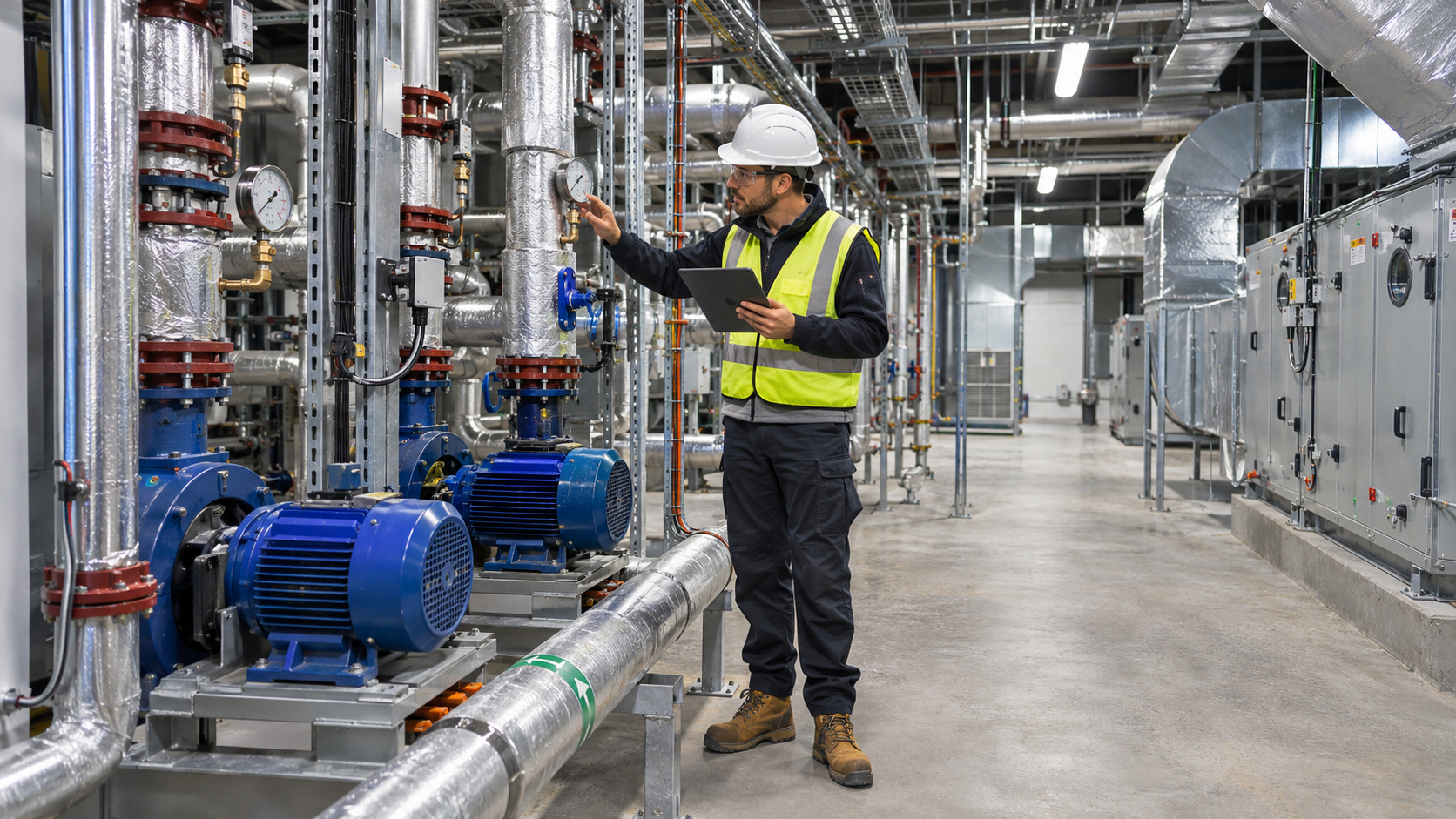 Chiller plant optimisation is an important consideration for businesses operating large commercial buildings, industrial facilities, hospitals, hotels and retail properties. A chiller plant that operates inefficiently can consume excessive energy, increase operating costs and place unnecessary demands on critical mechanical equipment.
For many building operators, the challenge is not simply whether the chillers are running. It is whether the entire chilled water system is operating as efficiently as it should.
A commercial chiller plant consists of several interconnected components, including chillers, pumps, heat exchangers, cooling towers, pipework and building management controls. Each component influences overall system performance. When one part of the system operates inefficiently, the consequences can extend throughout the plant.
Chiller plant optimisation involves assessing how these components work together, identifying performance limitations and making targeted improvements to achieve better efficiency, reliability and operational control.
For businesses across Western Australia, where commercial cooling systems can experience significant seasonal demand, effective chiller plant management can make an important difference to long term operating performance.
What Is Chiller Plant Optimisation?
Chiller plant optimisation is the process of improving the overall performance of a chilled water system through engineering assessment, equipment adjustments, control improvements and ongoing performance monitoring.
Rather than concentrating on individual pieces of equipment, optimisation considers how the complete plant operates under different building loads and operating conditions.
For example, a commercial building may have multiple chillers installed to meet its cooling requirements. However, operating all available chillers simultaneously may not always be the most efficient approach.
Depending on the actual cooling demand, a better operating strategy may involve running fewer chillers at an appropriate load while adjusting pump operation and water flow to match system requirements.
The objective is to ensure that the plant delivers the required cooling capacity without consuming unnecessary energy or placing excessive demands on equipment.
A properly optimised chiller plant considers several important factors:
- Chiller operating efficiency and capacity.
- Chiller sequencing and load distribution.
- Chilled water flow and temperature differences.
- Pump performance and energy consumption.
- Condenser water temperatures and cooling tower performance.
- Heat transfer efficiency.
- Building management system controls.
- Operating schedules and actual cooling demand.
These factors must be considered together. Improving one component without understanding its effect on the rest of the system can produce limited results or create new operational problems.
Why Commercial Chiller Plants Lose Efficiency
Commercial chiller plants are designed to operate within specific engineering parameters. Over time, changes in building occupancy, equipment condition, operating schedules and cooling requirements can affect how effectively the original system performs.
A plant that operated efficiently when first commissioned may no longer deliver the same performance several years later.
In many cases, the problem is not a major equipment failure. It is a gradual decline in system performance caused by several smaller issues.
1. Incorrect Chiller Sequencing
Where multiple chillers serve the same building, the sequence in which they operate has a direct influence on energy consumption.
Chiller sequencing determines when individual machines start, stop and share the building’s cooling demand.
If the sequencing strategy is poorly configured, multiple chillers may operate at inefficient loading conditions. Alternatively, one machine may carry an excessive proportion of the load while other available equipment remains underutilised.
An effective sequencing strategy considers the cooling demand, available chiller capacity, operating efficiency and minimum operating requirements of each machine.
The objective is to distribute the load appropriately while maintaining stable chilled water temperatures and reliable cooling delivery.
2. Poor Chilled Water Temperature Control
Chilled water temperature is a fundamental part of commercial HVAC performance.
The temperature at which water leaves the chiller influences the refrigeration cycle and the amount of work required to produce the required cooling.
Operating at unnecessarily low chilled water temperatures can increase compressor energy consumption.
However, increasing the chilled water temperature without considering the building’s cooling requirements can reduce cooling capacity at air handling units and other terminal equipment.
The correct operating temperature must therefore be established through an assessment of the building’s actual requirements, system design and equipment limitations.
A well controlled chilled water system should maintain the required indoor conditions without demanding more cooling than necessary.
3. Inefficient Pump Operation
Chilled water and condenser water pumps play an important role in moving water throughout the chiller plant.
Pumps that operate continuously at excessive speeds or deliver more water than the system requires can contribute to unnecessary energy consumption.
In some installations, pump control strategies have not been properly adjusted to reflect changing cooling demand.
Variable speed drives can help address this issue by allowing pump speeds to respond to system requirements. However, the control strategy must account for minimum flow requirements, differential pressure and the operating characteristics of connected equipment.
Simply reducing pump speed is not enough. The objective is to achieve the required water circulation while avoiding unnecessary pumping energy.
4. Reduced Heat Transfer Performance
Heat transfer is central to the operation of a chiller plant.
Chillers rely on heat exchangers to transfer energy between refrigerant and water circuits. Cooling towers also play an important role in rejecting heat from water cooled chiller systems.
Over time, fouling, scaling, contamination and poor water treatment can affect heat transfer performance.
When heat exchangers become less effective, the chiller may need to work harder to achieve the required cooling output.
Cooling tower performance can also deteriorate due to restricted airflow, poor water distribution, blocked fill material or inadequate maintenance.
These issues should be identified through appropriate inspections and performance assessments rather than relying solely on general equipment servicing.
The Role of Chiller Sequencing in Plant Efficiency
Chiller sequencing is one of the most important considerations when optimising a commercial plant containing multiple chillers.
In larger buildings, cooling demand changes throughout the day. Occupancy, outdoor temperatures, equipment loads and operating schedules all influence how much cooling the building requires.
A plant designed to meet peak cooling demand may therefore spend considerable time operating at partial load.
If the control system does not respond appropriately to these changing requirements, the plant may consume more energy than necessary.
An effective sequencing strategy determines which chillers should operate and how cooling demand should be distributed.
For example, a building with three chillers may not need all three machines operating during periods of moderate demand. Depending on the equipment characteristics, operating two machines at suitable loading conditions may provide a more efficient outcome.
However, there is no universal sequencing arrangement that works for every installation.
The most appropriate strategy depends on:
- Individual chiller capacities.
- Chiller efficiency curves.
- Minimum and maximum operating loads.
- Chiller type and compressor technology.
- Available system redundancy.
- Chilled water demand.
- Operating requirements of the building.
Modern chiller plants can also incorporate advanced control strategies that consider equipment efficiency when selecting which machines should operate.
This allows the plant to respond more intelligently to changing conditions instead of relying on fixed operating schedules.
Improving Part Load Performance
Commercial chillers are frequently selected to meet the maximum anticipated cooling requirements of a building.
However, maximum demand does not represent the operating conditions experienced throughout most of the year.
Many commercial buildings spend significant periods operating below their design cooling capacity.
This makes part load performance an important consideration when evaluating chiller plant efficiency.
A chiller’s efficiency can vary depending on its loading conditions, compressor design, condenser temperatures and chilled water requirements.
Operating a machine at an unsuitable load can reduce its efficiency. In some circumstances, distributing the load across several machines may also produce a less efficient result than operating fewer chillers.
Understanding these differences is essential when developing an effective plant operating strategy.
Why Compressor Technology Matters
Different chiller technologies have different operating characteristics.
Screw, scroll and centrifugal compressors each have specific performance advantages depending on the application and required cooling capacity.
Oil free Danfoss Turbocor compressor technology, for example, is used in certain commercial chiller applications where high efficiency, particularly under suitable part load conditions, is an important consideration.
However, selecting or upgrading compressor technology requires more than comparing individual equipment specifications.
The complete application must be assessed, including operating temperatures, cooling requirements, system configuration and compatibility with existing equipment.
For older commercial chiller installations, compressor upgrades or replacement may provide an opportunity to improve performance. The potential benefits should be evaluated against the condition of the existing machine and the wider chilled water system.
Optimising Chilled Water and Condenser Water Systems
A chiller does not operate independently of the water systems connected to it.
Chilled water and condenser water circuits influence heat transfer, equipment efficiency and overall plant performance.
Both systems must operate within the appropriate design and manufacturer requirements.
Chilled Water System Performance
The chilled water system distributes cooling throughout the building through pipework, pumps, air handling units and other connected equipment.
One important performance measurement is the temperature difference between the chilled water supply and return.
This is commonly referred to as the chilled water temperature differential or Delta T.
A low Delta T condition can indicate that the system is not transferring or utilising cooling capacity as intended.
Possible contributing factors include excessive water flow, control valve issues, poor coil performance, incorrect balancing or unsuitable operating conditions.
When Delta T is consistently lower than expected, the system may require higher water flow to deliver the required cooling capacity.
This can increase pumping energy and affect the operation of the wider chiller plant.
Investigating the underlying cause is important before making changes to pump speeds, water temperatures or control settings.
Condenser Water System Performance
For water cooled chillers, the condenser water system removes heat rejected by the refrigeration cycle.
Cooling tower performance, condenser water temperatures and water flow all influence how effectively this process takes place.
If condenser water temperatures become excessively high, the chiller may experience increased operating pressures and higher compressor energy consumption.
Cooling tower maintenance, appropriate water treatment, correct water distribution and effective airflow are therefore important considerations.
Where operating conditions and equipment specifications permit, optimising condenser water temperature can also contribute to improved chiller efficiency.
These adjustments must be carefully controlled to avoid operating outside the manufacturer’s recommended limits.
How Building Management Systems Improve Chiller Plant Control
A building management system plays an important role in coordinating commercial HVAC equipment.
In larger installations, the BMS can monitor and control chillers, pumps, cooling towers, valves and other connected mechanical equipment.
When correctly configured, it provides operators with greater visibility of plant performance and allows equipment to respond to changing building requirements.
For chiller plant optimisation, the BMS can support several important functions.
Automated Chiller Sequencing
The BMS can determine when individual chillers should start or stop based on cooling demand and programmed operating conditions.
This helps coordinate multiple machines and reduce unnecessary equipment operation.
Variable Speed Pump Control
Where suitable variable speed drives are installed, the BMS can adjust pump operation according to system demand.
This allows water circulation to respond to actual requirements rather than operating continuously at a fixed speed.
Temperature and Pressure Monitoring
Monitoring chilled water temperatures, condenser water conditions and system pressures helps operators identify changes in plant performance.
Unusual operating conditions can indicate developing equipment problems or control issues that require investigation.
Performance Monitoring and Reporting
Historical operating data can help identify recurring inefficiencies and changes in equipment performance.
For example, operators may identify increases in energy consumption, unusual operating hours or temperature conditions that consistently fall outside expected operating ranges.
However, having a BMS does not automatically mean a chiller plant is optimised.
Poorly configured control sequences, incorrect sensor readings and inadequate system integration can prevent the BMS from delivering its intended benefits.
The control strategy must be developed around the actual equipment, building requirements and hydraulic configuration.
When Should a Commercial Chiller Plant Be Assessed?
Chiller plant optimisation should not only be considered when equipment begins to fail.
A system can continue operating while gradually becoming less efficient, creating additional energy costs without obvious signs of a major problem.
Building operators should consider a plant performance assessment when they notice:
- Increasing electricity consumption without a corresponding increase in cooling demand.
- Difficulty maintaining required indoor temperatures.
- Chillers operating for longer periods than expected.
- Frequent starting and stopping of equipment.
- Pumps operating continuously at high speeds.
- Inconsistent chilled water supply and return temperatures.
- Cooling towers struggling to maintain expected operating conditions.
- Repeated control alarms or unstable system operation.
- Increasing maintenance requirements across the chiller plant.
These symptoms do not necessarily indicate a single underlying problem.
A detailed engineering assessment can help establish whether the cause relates to equipment condition, control configuration, water flow, heat transfer or changes in building demand.
Identifying the actual cause is essential before investing in equipment upgrades or major system modifications.
Should You Upgrade Existing Chillers or Optimise the Current Plant?
When a commercial chiller plant becomes inefficient, building owners may immediately consider replacing the existing equipment.
However, a complete replacement is not always the most appropriate solution.
In some installations, the chillers remain mechanically sound but operate inefficiently because of outdated controls, poor sequencing, incorrect water flow or deteriorating heat transfer performance.
Addressing these issues may improve system operation without requiring a complete plant replacement.
In other situations, ageing equipment, obsolete components or significant reductions in performance may justify a more substantial upgrade.
A practical assessment should consider the following areas.
Existing Equipment Condition
The condition of compressors, heat exchangers, electrical components and refrigeration circuits should be assessed to establish whether the existing equipment remains suitable for continued operation.
Control System Capability
Older control systems may lack the flexibility required to coordinate modern chiller plant operations.
Upgrading BMS controls or introducing more effective operating sequences may provide an opportunity to improve performance.
Compressor and Component Upgrades
Depending on the chiller model and manufacturer support, compressor replacements, electronic expansion valve upgrades and software improvements may be possible.
These options must be evaluated against the original equipment design and application requirements.
Long Term Operating Costs
The cost of an upgrade should be considered alongside expected energy consumption, maintenance requirements, equipment reliability and remaining service life.
The objective is to identify the most practical engineering solution for the building rather than replacing equipment unnecessarily.
Why Chiller Plant Commissioning and Ongoing Maintenance Matter
Even a well designed and upgraded chiller plant needs to be properly commissioned and maintained.
Commissioning verifies that equipment, controls and connected systems operate in accordance with their design requirements.
This includes checking equipment operation, water flow, temperature control, pump performance, safety functions and BMS integration.
Without appropriate commissioning, control changes or equipment upgrades may not deliver the intended results.
Ongoing maintenance is equally important.
Heat exchangers, pumps, cooling towers, electrical components and refrigeration circuits require appropriate inspection and servicing to maintain reliable operation.
Performance monitoring should also continue after optimisation work has been completed.
This allows building operators to identify whether the improvements are being maintained and whether further adjustments are required as building conditions change.
For commercial properties with critical cooling requirements, a structured maintenance approach can help reduce unexpected equipment problems and support more consistent plant performance.
Chiller Plant Optimisation in Western Australia
Commercial buildings and industrial facilities across Western Australia operate under a range of demanding environmental and operational conditions.
High summer temperatures can increase cooling demand, particularly in large buildings with extensive occupancy, internal heat loads and equipment requirements.
For facilities operating in regional and remote locations, maintaining reliable cooling can also present additional challenges.
Chiller plants must be capable of meeting building requirements under the conditions they are expected to experience.
This makes correct equipment selection, control configuration and ongoing performance assessment particularly important.
For businesses in Perth and across Western Australia, optimising an existing chiller plant can provide an opportunity to address inefficient operating conditions, improve equipment coordination and support more reliable cooling.
However, every installation is different.
The most effective solution depends on the building, the chiller equipment, the condition of the connected systems and the actual cooling requirements.
An engineering led assessment is therefore essential when identifying opportunities for improvement.
Improving Commercial Chiller Performance with Efficient Refrigeration & HVAC
At Efficient Refrigeration & HVAC, we understand the importance of reliable and efficient commercial chiller systems.
Our work covers commercial HVAC installations, specialist chiller servicing, repairs, preventative maintenance and equipment upgrades across Western Australia.
We recognise that improving chiller plant performance requires an understanding of the complete mechanical system, not simply the operation of individual machines.
From assessing existing chiller installations to identifying opportunities for control improvements, compressor upgrades and equipment optimisation, our focus is on practical solutions that support long term system performance.
Whether your facility operates a single commercial chiller or a more complex central cooling plant, understanding how the system performs is an important step towards improving reliability and efficiency. Our approach to Chiller Plant Optimisation for Commercial Buildings focuses on identifying performance issues and opportunities to improve overall system operation.
If your commercial chiller plant is consuming more energy than expected, struggling to maintain cooling requirements or experiencing recurring operational issues, our team can help assess the system and identify appropriate solutions.
For businesses considering improvements to existing equipment, our article on Energy-Efficient Chiller Retrofits explains how targeted upgrades can improve chiller performance, reduce energy consumption and extend equipment life.
Contact Efficient Refrigeration & HVAC to discuss your commercial chiller requirements.