
Commercial Chiller Specialists in Western Australia: Maintenance, Repairs and Performance
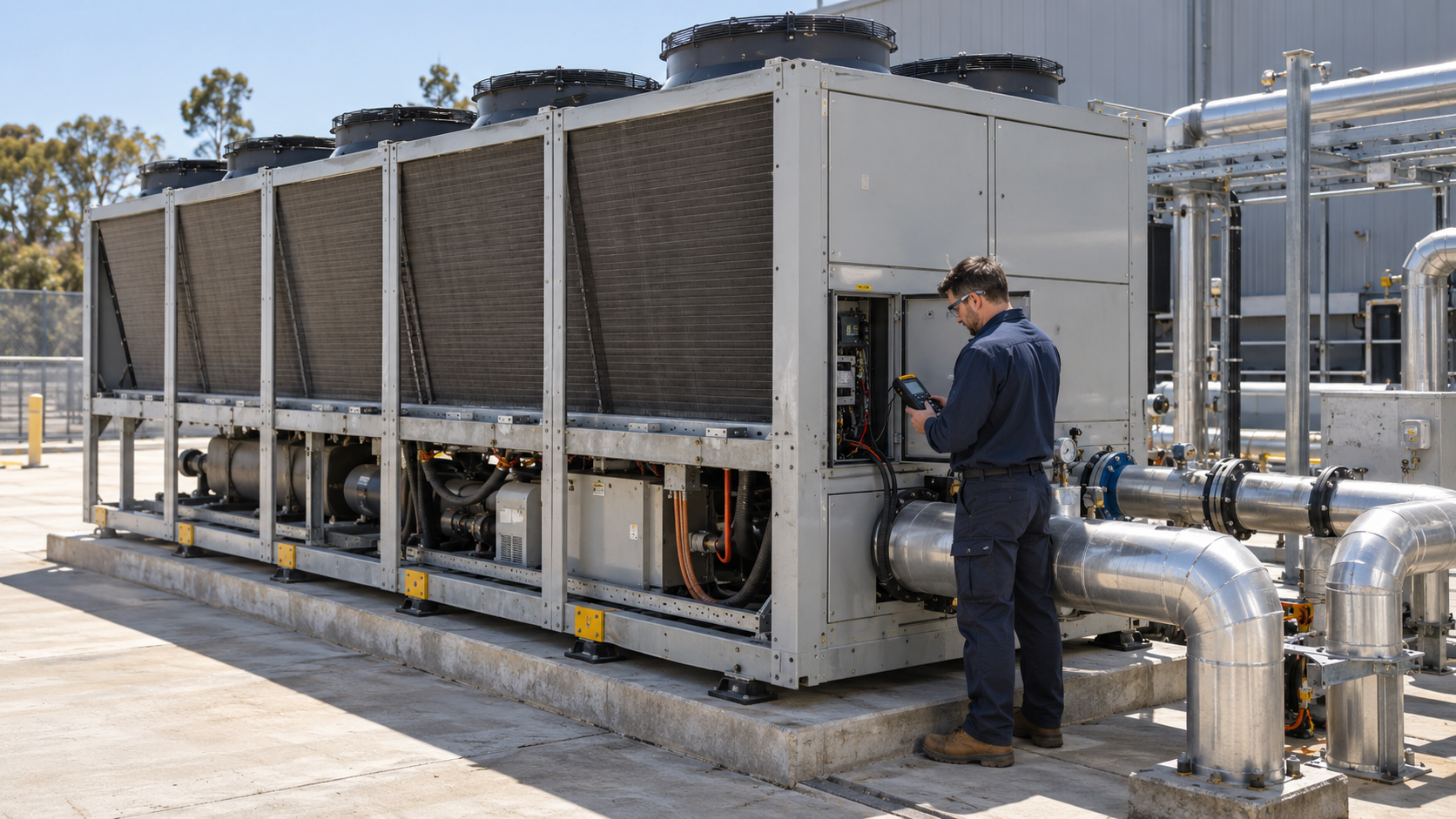 Commercial chiller specialists in Western Australia help businesses maintain reliable cooling, reduce energy waste and prevent unexpected equipment failures. For hotels, hospitals, shopping centres, data centres and industrial facilities, professional chiller maintenance and repairs are essential to keeping operations running efficiently. When a commercial chiller loses performance, energy consumption can rise, indoor temperatures can become difficult to control and costly disruptions may follow.
Experienced commercial chiller specialists in Western Australia help businesses maintain reliable cooling, identify faults early and make informed decisions about repairs, maintenance and equipment upgrades.
From hotels and hospitals to shopping centres, data centres and industrial facilities, commercial chillers require specialist attention. Regular servicing helps maintain performance, identify developing problems and support the long term reliability of critical cooling equipment.
Efficient Refrigeration & HVAC provides commercial chiller maintenance, repairs, upgrades and installation across Perth and Western Australia. Our technicians work with major chiller technologies and develop solutions that reflect the equipment, building requirements and operating conditions of each site.
This guide explains how specialist chiller services support commercial operations, which warning signs facility managers should recognise and how to choose the right maintenance or repair solution.
Why Commercial Chiller Expertise Matters
Commercial chillers rely on several interconnected components to deliver consistent cooling. These include compressors, heat exchangers, pumps, electrical equipment, controls and associated cooling systems.
A problem with one component can affect the performance of the entire installation.
For example, a chiller that struggles to maintain the required chilled water temperature may have a control fault, restricted heat transfer, a compressor problem or an issue with water flow. Adjusting the operating settings alone may not resolve the underlying cause.
Commercial chiller specialists assess the system, investigate performance issues and identify the work needed to restore reliable operation. This helps facility managers make informed decisions rather than relying on temporary adjustments that may leave the original fault unresolved.
For buildings with significant cooling demands, specialist support is particularly important. Early diagnosis can help reduce the risk of unexpected breakdowns, minimise operational disruption and avoid unnecessary expenditure. Commercial chiller specialists in Western Australia can assess equipment performance, identify developing faults and recommend solutions that suit the demands of each facility.
Which Industries Depend on Commercial Chillers?
Commercial chillers support a wide range of industries across Western Australia. However, cooling requirements vary between facilities, so maintenance planning should reflect the demands of each application.
Hotels and Hospitality Facilities
Hotels depend on reliable cooling to maintain comfortable conditions for guests, staff and visitors.
A chiller fault can affect guest rooms, restaurants, function spaces and other occupied areas. During periods of high occupancy or extreme outdoor temperatures, reduced cooling capacity can place additional pressure on hotel operations.
Planned maintenance helps identify developing faults before they cause significant disruption. It also allows servicing to be scheduled around occupancy levels and operational requirements.
Hospitals and Healthcare Buildings
Healthcare facilities have demanding environmental requirements. Depending on the application, cooling systems may support patient areas, clinical spaces, laboratories and other essential operations.
A chiller problem can create challenges for building management, particularly when cooling capacity must be maintained throughout the day.
Maintenance planning should consider the importance of the equipment, the consequences of reduced capacity and the need to coordinate work around facility operations. The maintenance strategy must also reflect the actual system configuration and the requirements of the building.
Shopping Centres and Retail Buildings
Shopping centres experience changing cooling demands throughout the day. Customer numbers, lighting, equipment and outdoor temperatures all influence the load placed on the chiller plant.
When a chiller cannot meet demand, indoor comfort may deteriorate. The system may also consume more energy while attempting to maintain the required temperatures.
Regular servicing and appropriate controls help the chiller respond to changing conditions. This supports more consistent cooling and helps facility managers identify performance issues before they affect shoppers, tenants or staff.
Data Centres and Technical Facilities
Data centres and other technology intensive facilities depend on cooling systems to manage the heat generated by operating equipment.
Cooling disruption can have serious operational consequences. Maintenance planning should therefore consider equipment condition, control performance, available system redundancy and the cooling requirements of the facility.
Routine servicing should form part of a wider strategy for maintaining cooling reliability. Facility managers should also ensure that developing faults are investigated promptly and that any corrective work reflects the demands of the installation.
Industrial and Mining Operations
Industrial and mining facilities may use chillers for building cooling, process cooling and specialised applications.
These sites can experience demanding operating conditions, variable production schedules and greater exposure to dust or other environmental factors. Such conditions can influence equipment performance and maintenance requirements.
A maintenance program designed for a standard commercial office may not be suitable for an industrial installation. The servicing approach should reflect the equipment, site conditions, operating hours and consequences of equipment failure.
Common Commercial Chiller Problems to Watch For
Chiller faults do not always begin with a complete breakdown. In many cases, equipment shows warning signs before cooling performance deteriorates significantly.
Recognising these signs gives facility managers an opportunity to investigate the problem and arrange corrective work before it causes greater disruption.
Reduced Cooling Capacity
If a chiller struggles to maintain the required chilled water temperature, the cause needs to be investigated.
Possible causes include dirty heat transfer surfaces, control faults, compressor problems, restricted water flow or issues elsewhere in the cooling system.
The correct diagnosis depends on the chiller design and operating conditions. A specialist assessment can establish why the equipment is no longer meeting demand and identify the appropriate corrective action.
Ignoring reduced cooling capacity can allow the underlying problem to worsen. It may also place additional demands on other equipment serving the same building.
Rising Energy Consumption
An unexplained increase in energy consumption may indicate that a chiller is using more power to deliver the same cooling output.
Dirty heat exchangers, incorrect control settings, mechanical deterioration and changes in operating conditions can all affect efficiency. However, higher energy use does not automatically mean that the chiller has developed a fault.
Outdoor temperatures, building occupancy and changes in cooling demand should also be considered.
Comparing operating data over time helps facility managers identify unusual patterns. A specialist can then investigate whether the increase relates to equipment performance, system controls or changing building requirements.
Unusual Noise or Vibration
Changes in noise or vibration can indicate a developing mechanical problem.
Possible sources include compressor issues, worn bearings, fan problems, loose components or other mechanical faults.
These symptoms deserve attention, particularly when they occur alongside reduced cooling performance, repeated alarms or changes in operating conditions.
A qualified technician can investigate the source of the noise or vibration and determine whether repairs are required. Identifying the problem early may help prevent further equipment damage.
Repeated Alarms and Control Faults
Chiller control systems monitor operating conditions and regulate equipment performance. When an alarm appears repeatedly, it may indicate a sensor fault, an electrical issue, an operating limit being reached or a mechanical problem.
Resetting the alarm without investigating its cause may allow the underlying fault to remain unresolved.
Maintenance should include appropriate fault diagnosis, a review of recurring alarms and confirmation that the control system is operating as intended. This helps distinguish between a temporary operating condition and a problem requiring corrective work.
Water Flow Problems
Chilled water systems rely on appropriate water flow to transfer heat effectively.
Pump faults, blocked strainers, control valve problems and other hydraulic issues can affect the amount of cooling delivered to a building.
In some cases, the chiller may be operating mechanically while a problem elsewhere in the chilled water system prevents it from meeting demand.
Effective troubleshooting must therefore consider the complete installation, including pumps, valves, pipework and associated equipment. Focusing on the chiller alone may overlook the actual cause of poor performance.
Why Preventative Chiller Maintenance Is Essential
Preventative chiller maintenance helps businesses identify developing faults, monitor equipment condition and plan servicing before problems become more disruptive.
It also allows facility managers to assess whether the equipment continues to meet the needs of the building. A suitable maintenance program should consider manufacturer recommendations, operating hours, equipment condition, site conditions and the consequences of failure.
The following areas are particularly important when maintaining commercial chiller systems.
Maintain Heat Transfer Performance
Heat exchangers play a central role in chiller operation. Dirt, fouling and other deposits can restrict heat transfer and increase the demands placed on the equipment.
Regular inspection and appropriate cleaning help maintain performance. The correct cleaning method depends on the chiller design, the type of heat exchanger and its condition.
Maintaining heat transfer performance can also help technicians identify developing problems before they have a greater effect on system operation.
Inspect Compressors and Associated Components
Compressors are among the most important components in a commercial chiller. Their condition directly affects the operation of the refrigeration system.
Depending on the equipment, maintenance may include reviewing operating conditions, checking alarms, inspecting electrical connections and looking for signs of mechanical deterioration.
Identifying unusual operating patterns can help facility managers plan corrective work before a component failure causes wider disruption. The appropriate inspection and servicing requirements will depend on the compressor type and manufacturer recommendations.
Review Controls and Operating Settings
Chiller controls influence equipment staging, operating limits and responses to changing cooling demand.
Incorrect settings or faulty sensors can contribute to poor performance and unnecessary energy consumption. Controls that do not respond appropriately to building requirements may also affect temperature stability.
A review of control operation helps establish whether the system is responding correctly to demand. Any adjustments should be based on the equipment design, operating conditions and requirements of the building.
Check Pumps and the Wider Chilled Water System
Reliable chiller operation depends on more than the refrigeration circuit.
Pumps, valves, strainers, pipework and associated equipment influence the movement of chilled water throughout the system. Problems with these components can reduce cooling performance even when the chiller itself is functioning correctly.
Maintenance should therefore consider the wider installation when investigating performance issues. This approach helps technicians identify the underlying cause rather than treating only the most visible symptom.
Keep Accurate Service Records
Maintenance records give facility managers a clearer picture of equipment condition and service history.
They help identify recurring faults, track completed repairs and support decisions about future maintenance, upgrades or replacement. Consistent reporting is particularly valuable for businesses managing multiple buildings or critical cooling systems.
Clear service records also make it easier to prioritise outstanding work and plan expenditure around operational requirements.
Efficient Refrigeration & HVAC provides planned maintenance programs designed around equipment requirements and site operations. Explore our HVAC maintenance and service capabilities to learn more about maintaining commercial cooling systems.
Chiller Repairs, Upgrades or Replacement: Which Is Right for Your Business?
When a commercial chiller develops a fault, repairing the equipment is not always the only option. In some situations, a targeted upgrade or complete replacement may provide better long term value.
The right decision depends on the severity of the fault, equipment age and condition, parts availability, energy performance and the expected cost of future maintenance. Commercial chiller specialists in Western Australia can help facility managers compare these options and determine the most appropriate solution for their equipment.
When Chiller Repairs May Be Appropriate
Repairing an existing chiller may be suitable when the equipment remains in good overall condition and the fault can be addressed at a reasonable cost.
A specialist assessment can identify the likely cause, establish the required repair and determine whether other components need attention.
Facility managers should also consider the risk of repeat failures. A repair that restores operation temporarily may not be the best long term solution if other major components are deteriorating or the equipment has a history of recurring problems.
Understanding the full condition of the chiller helps businesses make a more informed decision.
When an Upgrade May Deliver Better Value
Some chillers can benefit from targeted upgrades rather than complete replacement.
Depending on the equipment, potential options include control improvements, variable frequency drive installations, compressor replacement and suitable energy efficiency upgrades.
These measures may improve system operation or address specific performance limitations. However, their suitability depends on the existing installation, equipment compatibility and operational requirements.
An upgrade should be supported by a technical assessment. Facility managers should understand the expected benefits, associated costs and any limitations before proceeding.
When Replacement Should Be Considered
Chiller replacement may be appropriate when equipment is approaching the end of its useful life, major components are deteriorating or ongoing repair costs are becoming difficult to justify.
Replacement planning requires more than selecting a new chiller with a similar capacity to the existing unit.
The assessment should consider the building’s actual cooling demand, system design, available plant space, electrical requirements, controls and installation constraints. Access for equipment removal and installation may also affect project planning.
The objective is to select equipment that suits the application and supports reliable performance over its expected service life.
Efficient Refrigeration & HVAC also provides specialist chiller upgrades and retrofit solutions. Read more about our energy efficient chiller retrofits to understand how an existing installation may be improved.
Specialist Support for Different Chiller Technologies
Commercial chillers are available in several configurations, each with different operating characteristics and maintenance requirements. Understanding the technology is important when diagnosing faults, planning repairs and assessing upgrade options.
Centrifugal Chillers
Centrifugal chillers are commonly used in large cooling applications. Their performance depends on factors such as operating conditions, heat transfer, compressor operation and system controls.
Specialist maintenance helps assess equipment condition, investigate performance changes and identify opportunities to improve reliability.
Screw Chillers
Screw chillers are used across a range of commercial and industrial applications.
Maintenance requirements vary by model and design. Relevant checks may include compressor operation, lubrication systems where applicable, electrical components and control performance.
Accurate diagnosis is important when a screw chiller develops a fault, as the appropriate corrective action depends on the specific equipment and operating conditions.
Scroll and Reciprocating Chillers
Scroll and reciprocating technologies are used across different cooling capacities and applications.
Servicing may include assessing operating performance, checking electrical condition and inspecting relevant refrigeration components. The required maintenance depends on the equipment configuration and manufacturer recommendations.
Oil Free Centrifugal Technology
Oil free centrifugal chillers use specialised compressor technology and control systems. These systems have specific operating requirements that technicians must understand when carrying out diagnosis, maintenance or repairs.
Efficient Refrigeration & HVAC has specialist experience with Smardt, Aermec and Danfoss Turbocor related chiller technologies, including relevant retrofit and replacement work.
Our specialist chiller services provide further information about our capabilities across commercial chiller systems.
How to Choose the Right Commercial Chiller Specialists in Western Australia
Selecting a chiller service provider involves more than comparing the cost of a maintenance visit. Facility managers should consider technical experience, equipment knowledge, diagnostic capability and the provider’s ability to work around site operations.
The following factors can help guide the selection process.
Look for Relevant Technical Experience
Chillers vary significantly in design, capacity and complexity. Ask whether the service provider has experience with the equipment installed at your facility.
For specialised systems, relevant manufacturer training and access to technical support can be particularly valuable. Experience with similar equipment can also help technicians investigate faults and recommend suitable corrective work.
Consider the Full Scope of Service
A chiller fault may involve the compressor, controls, chilled water pumps or other associated equipment.
A service provider capable of assessing the wider system can investigate how these components interact and identify the underlying cause of poor performance.
This is important because treating an individual symptom may not resolve a problem that originates elsewhere in the installation.
Ask About Maintenance Planning and Reporting
A structured maintenance program should provide clear information about completed work, identified faults and recommended actions.
Service reports help facility managers understand equipment condition, prioritise repairs and plan future maintenance expenditure. They also provide a record that can be reviewed when assessing recurring faults or considering equipment replacement.
Prioritise Operational Requirements
Commercial cooling systems often serve occupied buildings and business critical operations. Maintenance and repair work must therefore account for site access, operating schedules, safety requirements and the consequences of disruption.
The service provider should understand these constraints and plan work accordingly. The appropriate approach will depend on the facility, the equipment and the level of cooling reliability required.
Commercial Chiller Services Across Perth and Western Australia
Western Australian facilities operate in varied conditions, from metropolitan commercial buildings to regional and industrial sites.
High outdoor temperatures can increase cooling demand. Dust, coastal exposure and other site specific conditions may also influence equipment performance and maintenance requirements.
A suitable chiller maintenance strategy should account for these factors rather than applying the same schedule to every installation. Equipment type, operating hours, building demand and the consequences of failure should all inform the servicing approach.
Efficient Refrigeration & HVAC provides commercial chiller services across Perth and Western Australia. We support building owners, contractors and commercial operators with chiller maintenance, repairs, installation and specialist upgrades.
Our work covers major chiller types, associated mechanical equipment and systems that support reliable cooling. We assess the technical requirements of each installation to help determine an appropriate solution for the application.
Whether your facility operates a commercial building, hospitality venue, healthcare site or industrial plant, specialist chiller support can help you manage equipment condition and make informed decisions about maintenance and future investment.
Speak With Commercial Chiller Specialists at Efficient Refrigeration & HVAC
Reliable chiller performance is essential to many commercial buildings and industrial facilities. When cooling capacity declines, energy consumption increases or recurring faults appear, early investigation can help identify the cause and determine the right response.
Efficient Refrigeration & HVAC provides commercial chiller maintenance, fault diagnosis, repairs, upgrades and installation across Perth and Western Australia.
Whether you need routine servicing or assistance with a major chiller project, our team can help assess your requirements and identify a suitable solution for your equipment and site.
Call 1300 189 336 or email service@eres.net.au to discuss your commercial chiller requirements.
Protect your cooling equipment with a maintenance strategy that reflects your system, your site and your operational needs.