
 Commercial HVAC Maintenance Checklist: Can Your System Pass the Ultimate Health Check?
Your commercial HVAC system might be running, but is it running as efficiently as it should? Use our commercial HVAC maintenance checklist to assess performance, identify potential warning signs and determine when professional servicing may be needed.
A system that switches on and provides cooling is not necessarily operating at its best. Dirty filters, poor airflow, unusual noises and inconsistent temperatures can all indicate developing problems.
For businesses across Perth and Western Australia, these issues can affect indoor comfort, energy consumption and daily operations. If left unchecked, minor faults may develop into expensive repairs or unexpected equipment downtime.
This commercial HVAC maintenance checklist will help you assess your system’s condition, identify potential warning signs and understand when professional servicing may be needed.
Answer each question honestly and give your system one point for every YES.
The Commercial HVAC Health Check
Use these 10 checks to assess the condition of your commercial HVAC system.
1. Is Your HVAC System Cooling Consistently?
Your system should maintain suitable indoor temperatures for the building and its intended use. A commercial HVAC maintenance checklist can help identify performance issues before they affect comfort or business operations.
If some areas remain too warm while others are comfortable, there may be an airflow, control or equipment performance problem.
Uneven cooling can be caused by blocked filters, ductwork issues, faulty sensors or problems with the system itself.
Health check: Does your system maintain consistent temperatures throughout the areas it serves?
2. Are Your Air Filters Clean?
Air filters collect dust and airborne particles before they enter the HVAC system.
Over time, filters become dirty and can restrict airflow. This may cause the system to work harder to maintain the required indoor temperature.
The appropriate filter replacement frequency depends on the equipment, operating hours and building conditions.
Health check: Are your filters inspected regularly and replaced when required?
3. Is Airflow Strong and Consistent?
Proper airflow helps distribute conditioned air throughout your building.
Weak airflow can make it difficult to maintain comfortable temperatures, even when the system is running.
Blocked grilles, dirty coils, fan problems and ductwork restrictions can all affect airflow.
Health check: Is air moving effectively through the supply outlets without noticeable restrictions?
4. Is Your System Free From Unusual Noises?
Commercial HVAC equipment produces normal operating sounds. However, sudden or unusual noises should not be ignored.
Rattling may indicate loose components. Grinding can point to mechanical wear, while buzzing may be associated with electrical components or vibration.
These sounds do not confirm a specific fault, but they can indicate that an inspection is needed.
Health check: Is your HVAC system operating without unusual rattling, grinding, buzzing or excessive vibration?
5. Is Your HVAC Energy Consumption Consistent?
An unexpected increase in electricity consumption can indicate a change in building demand or HVAC performance.
Dirty coils, restricted airflow, faulty controls and worn components can cause equipment to work harder than necessary.
However, energy use is also affected by outdoor temperatures, occupancy, operating hours and electricity rates.
Health check: Is your energy consumption consistent with your building’s usage and cooling requirements?
6. Are There Any Signs of Water Leaks?
Commercial air conditioning systems can produce condensate as they remove moisture from indoor air.
This water should drain away correctly. Blocked drains, damaged drain lines and other faults can cause leaks.
Water around HVAC equipment or inside the building should be investigated, particularly if it appears near electrical components or creates a slip hazard.
Health check: Are your HVAC units, surrounding areas and accessible drainage points free from visible signs of leakage?
7. Is Your HVAC System Responding Correctly to Controls?
Thermostats, operating schedules and building management systems help control when equipment runs and how it maintains indoor conditions.
Incorrect settings or faulty controls can cause unnecessary operation, inconsistent temperatures or equipment that fails to start when required.
Reviewing system schedules can also help identify equipment running outside normal business hours.
Health check: Does your HVAC system respond correctly to temperature settings and operating schedules?
8. Are Your Coils and Outdoor Components Properly Maintained?
Evaporator and condenser coils transfer heat as part of the cooling process.
Dust and dirt can accumulate on these components and affect heat transfer. Outdoor equipment may also collect leaves and other debris.
The level of contamination depends on the installation and operating environment.
Health check: Are your coils and accessible outdoor components inspected and cleaned according to maintenance requirements?
9. Has Your HVAC System Been Professionally Serviced?
Routine maintenance helps identify developing faults before they cause more significant problems.
A professional inspection may include filters, coils, fans, motors, electrical components, controls, drainage and refrigeration performance.
The exact maintenance scope should reflect the equipment manufacturer’s recommendations, the building’s use and the conditions in which the system operates.
Health check: Has your commercial HVAC system received appropriate preventative maintenance at the required intervals?
10. Are Your Maintenance Records Up to Date?
Maintenance records help businesses track equipment condition, previous repairs and recurring faults.
Without accurate records, it can be difficult to identify patterns or determine whether a problem has been developing over time.
Keeping service reports and maintenance history also helps facility managers plan future maintenance and equipment upgrades.
Health check: Are your maintenance records current and do they clearly document inspections, repairs and outstanding issues?
How Did Your Commercial HVAC System Score?
Give your system one point for every YES answer.
Count your points out of 10 to assess how well your current maintenance practices are addressing common HVAC warning signs.
Score 7 to 10: A good starting point
Your answers suggest that several important maintenance checks are being addressed. However, a high score does not guarantee that the system is free from faults. Continue routine inspections and arrange professional servicing according to your maintenance plan.
Score 4 to 6: Time to review your maintenance
Your answers indicate that some important checks may be missing or that your system could need attention. Review the questions you answered NO to and prioritise any issues affecting cooling, airflow, energy consumption or safe operation.
Score 0 to 3: Take action
Your answers suggest that several important aspects of system condition or maintenance need attention. Arrange a professional assessment to identify potential problems and determine the appropriate next steps.
Your score is a simple awareness tool, not a technical assessment. Any serious warning sign should be investigated regardless of the total score.
What Happens When Commercial HVAC Maintenance Is Neglected?
Skipping routine maintenance may seem like a way to reduce operating costs, but it can leave developing problems undetected.
The consequences depend on the equipment and the nature of the fault. However, common risks include the following.
Higher Energy Consumption
Dirty filters, contaminated coils and control problems can affect system performance.
When equipment struggles to deliver the required cooling, it may operate for longer periods or consume more energy than necessary.
Regular maintenance helps identify these conditions before they continue unchecked.
Unexpected Equipment Failure
Small mechanical or electrical problems can develop into more serious faults.
Worn components, abnormal vibration and recurring control alarms may indicate that equipment requires attention.
Identifying these signs early can help businesses plan repairs and reduce the risk of unexpected disruption.
Uncomfortable Working Conditions
Poor cooling and inconsistent airflow can affect employees, customers and visitors.
In workplaces where indoor temperatures must remain within specific operating requirements, HVAC performance can be particularly important.
Maintaining the system helps businesses identify problems that may affect indoor conditions.
More Disruptive Repairs
When faults are ignored, the eventual repair may involve more than the original problem.
The extent of the damage depends on the fault, operating conditions and how long the equipment continues running.
Regular inspections can help identify developing issues and allow businesses to make informed decisions about repairs.
How Often Should Commercial HVAC Systems Be Checked?
There is no single maintenance schedule that suits every commercial HVAC system.
A small office system may have different requirements from equipment serving a supermarket, hospital, hotel or industrial facility.
Maintenance frequency should take into account:
- Equipment type and age
- Manufacturer recommendations
- Daily operating hours
- Building occupancy
- Dust and environmental exposure
- Cooling and ventilation requirements
- Previous faults and repair history
- Applicable maintenance and compliance requirements
For example, equipment operating for extended periods in a dusty environment may require more frequent filter inspections than a system in a cleaner, less demanding location.
Businesses should establish a maintenance program that reflects actual site conditions rather than relying on a general schedule alone.
Why Commercial HVAC Maintenance Matters in Western Australia
Western Australian businesses can experience demanding conditions during periods of hot weather.
As outdoor temperatures rise, commercial air conditioning systems may need to work harder to remove heat and maintain suitable indoor conditions.
Dust and debris can also affect equipment, depending on its location and exposure.
These conditions make it important to monitor system performance and address developing faults before peak cooling demand.
For commercial facilities, preventative maintenance can help identify restricted airflow, dirty coils, control problems and mechanical wear that may affect reliability.
A planned approach also helps facility managers schedule servicing around business operations rather than waiting for an unexpected failure.
What Should a Commercial HVAC Maintenance Program Include?
A suitable maintenance program should address the main components and operating requirements of the equipment.
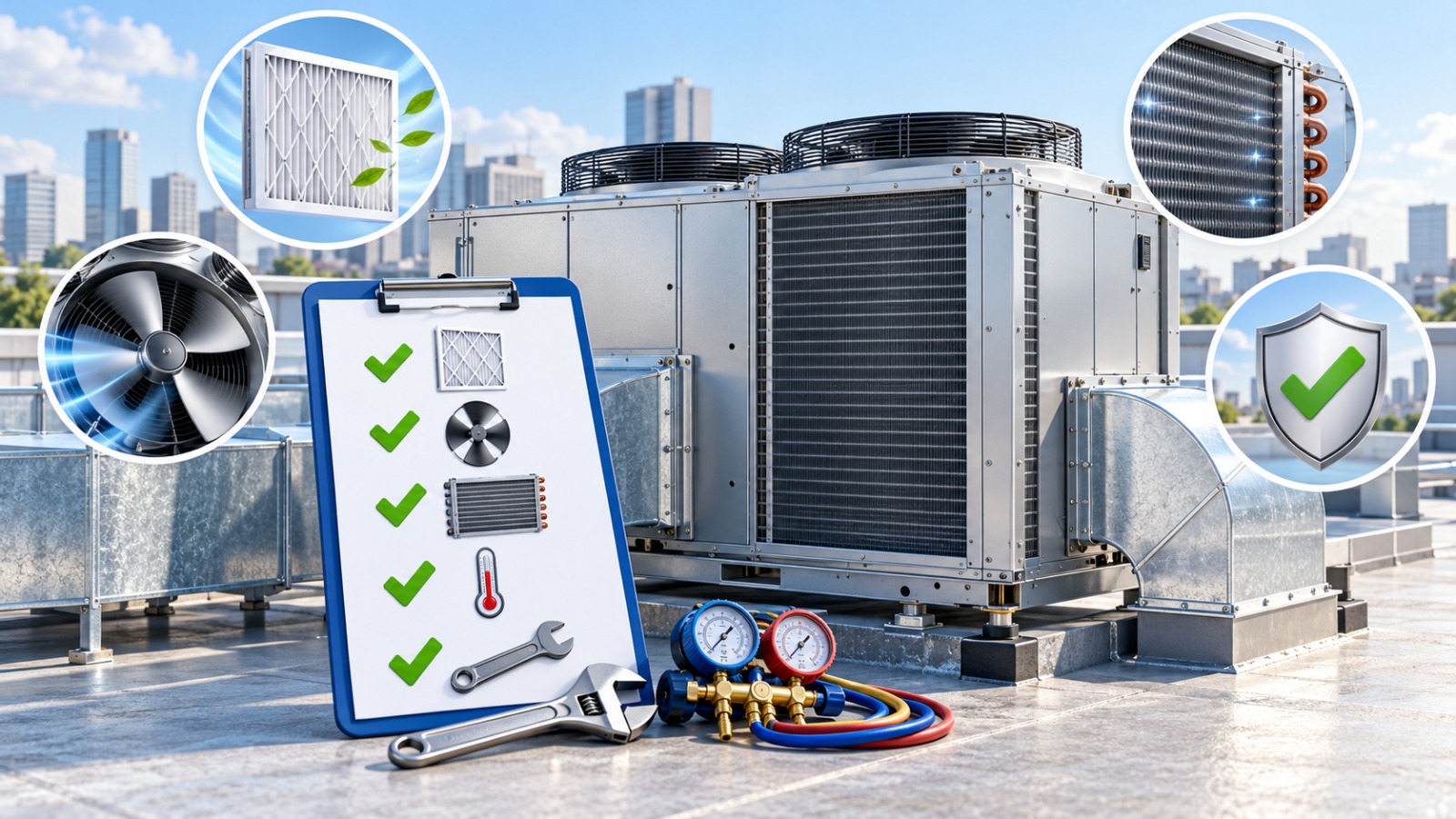
Depending on the system, inspections may include:
- Cleaning or replacing air filters
- Inspecting evaporator and condenser coils
- Checking fans, motors and bearings
- Inspecting belts where fitted
- Checking electrical components
- Testing thermostats and controls
- Inspecting condensate drainage
- Assessing airflow and ductwork
- Checking refrigeration performance
- Inspecting compressors and other major components
- Recording faults and unusual operating conditions
- Reviewing previous maintenance findings
Maintenance should be carried out by appropriately qualified personnel, with the scope determined by the equipment and site requirements.
It is also important to document any issues that require follow up. Identifying a fault is only useful if the necessary action is taken.
Do Not Wait for a Breakdown to Check Your HVAC System
A commercial HVAC system can continue operating even when its performance is deteriorating.
Dirty filters, unusual noises, inconsistent temperatures and rising energy consumption may indicate that the equipment needs attention.
Using a regular health check can help businesses recognise warning signs and review whether their maintenance program is keeping pace with the demands placed on their equipment.
However, a checklist should complement professional servicing, not replace it.
If your system shows signs of a serious fault, arrange an inspection even if your overall score is high.
Is Your Commercial HVAC System Due for a Health Check?
Efficient Refrigeration & HVAC provides commercial HVAC maintenance and service across Perth and Western Australia.
Our team helps businesses address HVAC faults, maintain equipment and plan servicing around their operational requirements. Use our Commercial HVAC Maintenance Checklist to identify potential warning signs and understand when your system may need professional attention.
If your system is showing signs of poor performance or your maintenance program needs reviewing, we can help you determine the appropriate next steps.
Call 1300 189 336 or email service@eres.net.au to discuss your commercial HVAC maintenance requirements.
Keep your system maintained, address warning signs early and give your business the best opportunity to avoid preventable HVAC disruption.