
Commercial HVAC Commissioning: Getting Systems Right From Day One
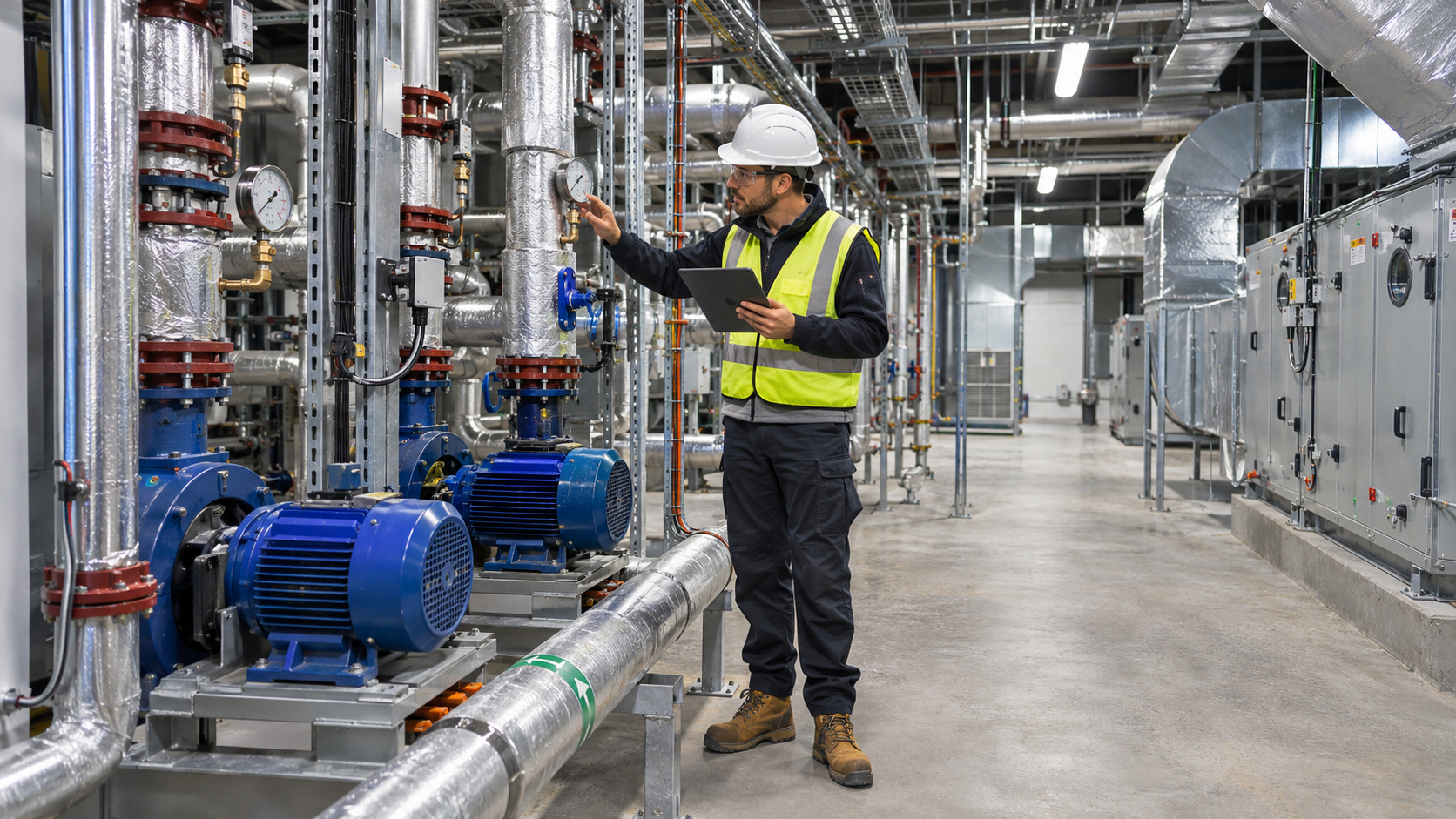 Commercial HVAC commissioning is a critical stage in ensuring that newly installed or upgraded systems operate as intended. Even when equipment has been correctly selected and installed, poor commissioning can affect cooling capacity, airflow, energy consumption and overall system reliability.
For commercial buildings, these problems can become expensive. Inadequate airflow, incorrect water flow rates, poorly configured controls and equipment operating outside its design parameters can all affect system performance. These issues may also go unnoticed until the building is occupied and the HVAC system is placed under normal operating demand.
A successful installation therefore involves more than connecting equipment and switching it on. Every major component must be tested, adjusted and verified to confirm that the complete system performs according to its design requirements.
For building owners, developers, project managers and facilities teams across Western Australia, proper commercial HVAC commissioning helps protect the investment in building services and establishes a reliable starting point for long term operation.
What Is Commercial HVAC Commissioning?
Commercial HVAC commissioning is the process of inspecting, testing, adjusting and verifying heating, ventilation, air conditioning and refrigeration systems to confirm that they operate according to their intended design and performance requirements.
The process covers more than individual equipment checks. It considers how different components work together to deliver the required heating, cooling, ventilation and temperature control throughout a building.
Depending on the project, commissioning may involve:
- Chillers and refrigeration equipment.
- Air handling units and ventilation systems.
- Chilled water pumps and associated pipework.
- Cooling towers and condenser water systems.
- Ductwork, dampers and air distribution.
- Electrical connections and equipment operation.
- Building management systems and control sequences.
- Safety devices and equipment protection settings.
Each component must operate correctly, but the complete system must also work as an integrated unit.
For example, a commercial chiller may operate correctly during an individual equipment test. However, if chilled water flow is inadequate or the connected air handling units are not properly balanced, the building may still struggle to achieve its required cooling conditions.
Commissioning helps identify these problems before they become ongoing operational issues.
Why Is HVAC Commissioning Important?
Commercial buildings depend on HVAC systems to maintain suitable indoor conditions and support daily operations. A poorly commissioned system can affect these requirements from the beginning of its operating life.
The consequences are not always immediately obvious. A system may appear to be running normally while consuming more energy than necessary, delivering inconsistent cooling or placing additional demand on mechanical components.
Proper commissioning helps address these risks before they affect building performance.
1. Confirms Equipment Operates as Designed
Commercial HVAC equipment is selected to meet specific building requirements. These include cooling loads, airflow requirements, operating temperatures, water flow rates and expected occupancy levels.
Commissioning checks whether the installed equipment can meet these requirements under the intended operating conditions.
This includes checking operating pressures, temperatures, electrical readings and equipment performance against the relevant design information and manufacturer specifications.
Where measurements differ from expected values, further investigation and adjustment may be required.
Without these checks, an installation may be handed over without sufficient evidence that the system can deliver its intended performance.
2. Helps Prevent Unnecessary Energy Consumption
Incorrect system settings and poor equipment performance can increase energy consumption.
For example, excessive pump speeds, incorrect chilled water temperatures, poorly adjusted dampers and unsuitable control sequences can cause HVAC equipment to work harder than necessary.
Commissioning helps identify these issues and establish appropriate operating conditions.
For large commercial buildings, even relatively small performance problems can affect operating costs when equipment runs for extended periods.
Correct commissioning also establishes a performance baseline that facilities teams can use when monitoring future energy consumption.
3. Reduces the Risk of Early Equipment Problems
New equipment is not automatically protected from operational problems.
Incorrect control settings, inadequate water flow, poor refrigerant charge, electrical issues and improperly adjusted components can affect equipment from the beginning of its operating life.
Commissioning provides an opportunity to identify these issues before the system enters normal service.
It also helps confirm that safety devices, alarms and protective functions respond as intended.
This is particularly important for large commercial chillers, refrigeration systems and mechanical plant operating under demanding conditions.
4. Improves Indoor Comfort and System Performance
A commercial HVAC system must distribute heating or cooling effectively throughout the building.
Poorly balanced airflow, incorrect temperature settings and inadequate water circulation can create inconsistent conditions between different areas.
Some spaces may become too warm while others receive excessive cooling. Occupants may also experience poor ventilation or inconsistent temperature control.
Commissioning checks whether air and water distribution systems are delivering the required performance.
The aim is to achieve the intended indoor conditions while allowing equipment to operate within its specified parameters.
What Does the Commercial HVAC Commissioning Process Involve?
The commissioning process should be planned around the equipment, system design and requirements of the project.
For complex commercial installations, it involves several stages. Each stage helps confirm that the equipment is ready for operation and that the complete HVAC system performs as expected.
1. Reviewing Design Specifications and Equipment Requirements
Commissioning should begin with a clear understanding of the system design.
Before testing starts, the commissioning team needs to understand the equipment installed, its intended operating conditions and how the different components are expected to function together.
This involves reviewing relevant project documentation, including:
- Mechanical drawings and equipment schedules.
- Equipment specifications and manufacturer information.
- Chilled water and condenser water design requirements.
- Airflow and ventilation requirements.
- Electrical and control diagrams.
- Equipment operating sequences.
- Design temperatures, pressures and flow rates.
This review helps establish the performance requirements against which the installed system will be assessed.
It also helps identify missing information, installation issues and potential coordination problems before commissioning progresses.
2. Completing Pre-Commissioning Inspections
Before equipment is started, the installation must be inspected to confirm that it is ready for testing.
This stage is important because operating equipment before completing essential installation checks can create unnecessary risks.
The inspection may include checking that equipment is securely installed, pipework is correctly connected, electrical connections have been completed by appropriately qualified personnel and access provisions are suitable for operation and maintenance.
For chilled water systems, pipework, valves, strainers and pumps should be inspected to confirm that the installation is ready for flushing, filling and subsequent testing.
Filters, belts, dampers, fans and other mechanical components should also be checked where applicable.
Any outstanding installation defects should be addressed before proceeding.
3. Testing Mechanical Equipment
Once pre-commissioning checks are complete, the equipment can be tested in accordance with the project requirements and manufacturer instructions.
This stage confirms that individual components operate correctly and that their performance is within the expected operating range.
For commercial chillers, testing may include reviewing:
- Entering and leaving chilled water temperatures.
- Condenser water temperatures where applicable.
- Water flow conditions.
- Refrigerant operating pressures and temperatures.
- Compressor operation and electrical readings.
- Safety controls and protective devices.
- Equipment alarms and fault indications.
For air handling units, checks may include fan operation, motor performance, filter installation, damper operation and coil performance.
Any unusual noise, vibration, abnormal readings or equipment alarms should be investigated.
Testing should use suitable, calibrated instruments and documented procedures. This provides a reliable basis for assessing actual operating conditions.
4. Testing and Balancing Air Distribution
Air balancing is an important part of commissioning commercial HVAC systems.
Even when air handling units and fans operate correctly, poor air distribution can prevent individual areas from receiving the airflow required by the design.
The process involves measuring airflow at relevant outlets and adjusting the distribution system to achieve the specified air quantities.
This may require adjustments to dampers, fan settings and other air distribution components.
The commissioning team should also check that air distribution is appropriate for the intended use of each space.
For example, a large retail environment, office building and industrial facility will have different ventilation and cooling requirements.
Accurate testing and balancing helps reduce uneven temperatures, poor airflow and unnecessary demand on HVAC equipment.
AIRAH’s DA04 manual provides recognised guidance on air system balancing and the testing, adjusting and balancing process.
5. Balancing Chilled Water Systems
Water balancing is equally important in commercial buildings that use chilled water for cooling.
Chillers depend on suitable water flow conditions to transfer heat effectively. If flow rates are too low, too high or unevenly distributed, system performance can be affected.
Commissioning should therefore include checks of chilled water circulation, pump operation, valve positions and flow conditions.
The process may involve:
- Checking pump operation and rotation.
- Verifying available water flow.
- Inspecting strainers and associated valves.
- Checking differential pressure across relevant components.
- Measuring entering and leaving water temperatures.
- Adjusting balancing valves where required.
- Confirming that connected equipment receives the required water flow.
Water balancing helps ensure that cooling is distributed according to the system design.
It is particularly important in larger buildings where multiple air handling units and cooling circuits operate from a central chiller plant.
6. Verifying Building Management System Controls
Modern commercial HVAC systems often rely on building management systems to coordinate equipment operation.
These controls can manage chiller sequencing, pump operation, air handling units, temperature settings, alarms and equipment schedules.
However, installing a control system does not automatically mean it will operate correctly.
Commissioning should verify that control sequences work as intended and that connected equipment responds correctly to control commands.
This may include checking:
- Temperature sensors and their readings.
- Equipment start and stop commands.
- Chiller and pump sequencing.
- Time schedules and operating modes.
- Valve and damper responses.
- Alarm notifications and fault conditions.
- Communication between controllers and connected equipment.
Incorrect control sequences can cause equipment to operate unnecessarily, conflict with other components or fail to respond to changing building conditions.
The aim is to confirm that the controls support the intended operation of the complete HVAC system.
7. Conducting Integrated System Performance Testing
Testing individual components is only part of the commissioning process.
The complete system must also be operated to confirm that its components work together under the required conditions.
For example, a chilled water system should be assessed as an integrated arrangement involving the chiller, pumps, pipework, valves, air handling units and control systems.
This stage helps identify problems that may not be visible during individual equipment checks.
Where project requirements allow, testing should consider different operating modes and relevant load conditions.
The commissioning team should review system temperatures, pressures, flow conditions, equipment responses and control sequences.
Any performance differences should be investigated and corrected where possible before handover.
Common Commercial HVAC Commissioning Problems
Several issues can affect the performance of a newly installed HVAC system if they are not identified during commissioning.
Incorrect Airflow and Water Flow Rates
Air and water distribution systems must deliver the required flow rates to support the building’s cooling and ventilation requirements.
Incorrect balancing can result in uneven temperatures, reduced cooling performance and increased equipment demand.
Incorrect Temperature and Pressure Settings
Operating temperatures and pressures must be checked against equipment specifications and system design requirements.
Incorrect settings can affect cooling performance and may cause equipment to operate outside its intended operating range.
Poorly Configured HVAC Controls
Incorrect control sequences, sensor readings and equipment schedules can affect how the system responds to building demand.
These problems may lead to unnecessary equipment operation, inconsistent indoor conditions and avoidable energy consumption.
Incomplete Installation Checks
Missing insulation, incorrectly positioned valves, unsecured pipework and incomplete electrical connections can affect system performance and reliability.
Pre-commissioning inspections help identify these problems before the equipment enters service.
Inadequate Commissioning Documentation
Commissioning is not complete simply because the equipment starts and runs.
Without recorded test results, operating parameters and adjustment settings, building owners may have limited information about how the system was configured at handover.
Proper documentation provides a reference for future servicing, fault investigation and performance monitoring.
Commissioning Is Not the End of the Process
A successfully commissioned HVAC system still requires ongoing attention.
Building occupancy, operating schedules, equipment demand and environmental conditions can change over time. These changes may affect the way the system performs after handover.
For example, a building may experience increased occupancy, additional equipment loads or changes to internal layouts. The original HVAC settings may no longer deliver the most suitable operating conditions.
This is why commissioning information should be retained and used as a reference during future maintenance.
Facilities managers can compare current operating readings against the original commissioning results to identify changes in performance.
Where significant differences occur, further investigation may be necessary.
Recommissioning or building tuning may also be appropriate when a building undergoes major changes or when its HVAC systems are no longer performing as intended.
For additional guidance on maintaining system performance after handover, read our DA19 HVAC Maintenance Guide.
What Should Be Included in an HVAC Commissioning Report?
Commissioning documentation provides evidence of the work completed and the operating conditions established during testing.
It should give the building owner and facilities team a clear record of the system’s condition at handover.
Depending on the project scope, a commissioning report may include:
- Equipment identification and model details.
- Inspection and pre-commissioning records.
- Airflow measurements and balancing results.
- Chilled water flow and temperature readings.
- Equipment operating pressures and temperatures.
- Electrical measurements where applicable.
- Control settings and operating sequences.
- Safety device and alarm test results.
- Identified defects and corrective actions.
- Final equipment settings and operating parameters.
- Outstanding items and recommendations.
The report should also identify any tests that could not be completed and explain why.
Accurate documentation helps establish a baseline for future maintenance and provides useful information when investigating operational problems.
It also supports a more informed handover between project teams, building owners and facilities managers.
Why HVAC Commissioning Matters in Western Australia
Commercial buildings across Western Australia operate under a range of demanding environmental and operational conditions.
High summer temperatures can place considerable demand on cooling equipment, particularly in large commercial buildings, industrial facilities, hotels and retail environments.
Where systems have not been properly commissioned, these conditions can expose existing performance problems.
A chiller that is not operating at its intended capacity, inadequate condenser water flow or poorly balanced air distribution can become more noticeable when cooling demand increases.
Commissioning is therefore particularly important for projects involving large cooling plants and complex mechanical installations.
Equipment must be tested against the actual design requirements of the building, with consideration given to expected operating conditions.
For businesses investing in new HVAC equipment or major system upgrades, this process helps establish confidence in the installation before normal building operations begin.
Choosing the Right Commercial HVAC Contractor for Commissioning
The quality of commissioning depends on more than the equipment being installed. It also depends on the technical knowledge, planning and coordination involved in testing the complete system.
When selecting a commercial HVAC contractor, building owners and project managers should consider the contractor’s experience with the type and scale of equipment involved.
For larger installations, this may include experience with commercial chillers, chilled water systems, air handling units, refrigeration equipment and building management systems.
It is also important to understand how commissioning activities will be documented, how performance issues will be addressed and what information will be provided at handover.
A contractor with experience in complex commercial HVAC installations can help identify problems that may otherwise affect the system after the building becomes operational.
Commissioning should be considered an essential part of project delivery, not an administrative task left until the end of construction.
Get Your Commercial HVAC System Right From Day One
A commercial HVAC installation should deliver more than equipment that starts and runs. It should provide reliable performance, effective cooling, appropriate airflow and controls that respond to the building’s requirements.
Commercial HVAC commissioning helps verify that these expectations are met before the system enters normal operation.
From equipment inspections and mechanical testing to air and water balancing, controls verification and integrated performance testing, each stage contributes to the overall quality of the installation.
For building owners and project managers across Western Australia, investing in a properly planned commissioning process helps protect the value of the HVAC installation and provides a sound foundation for future operation and maintenance.
Efficient Refrigeration & HVAC provides commercial HVAC expertise across Western Australia, supporting businesses with specialist cooling, refrigeration and mechanical services.
Whether you are planning a new commercial HVAC installation, upgrading an existing cooling plant or replacing major equipment, speak with our team about your project requirements.
Contact Efficient Refrigeration & HVAC