
DA19 HVAC Maintenance Guide
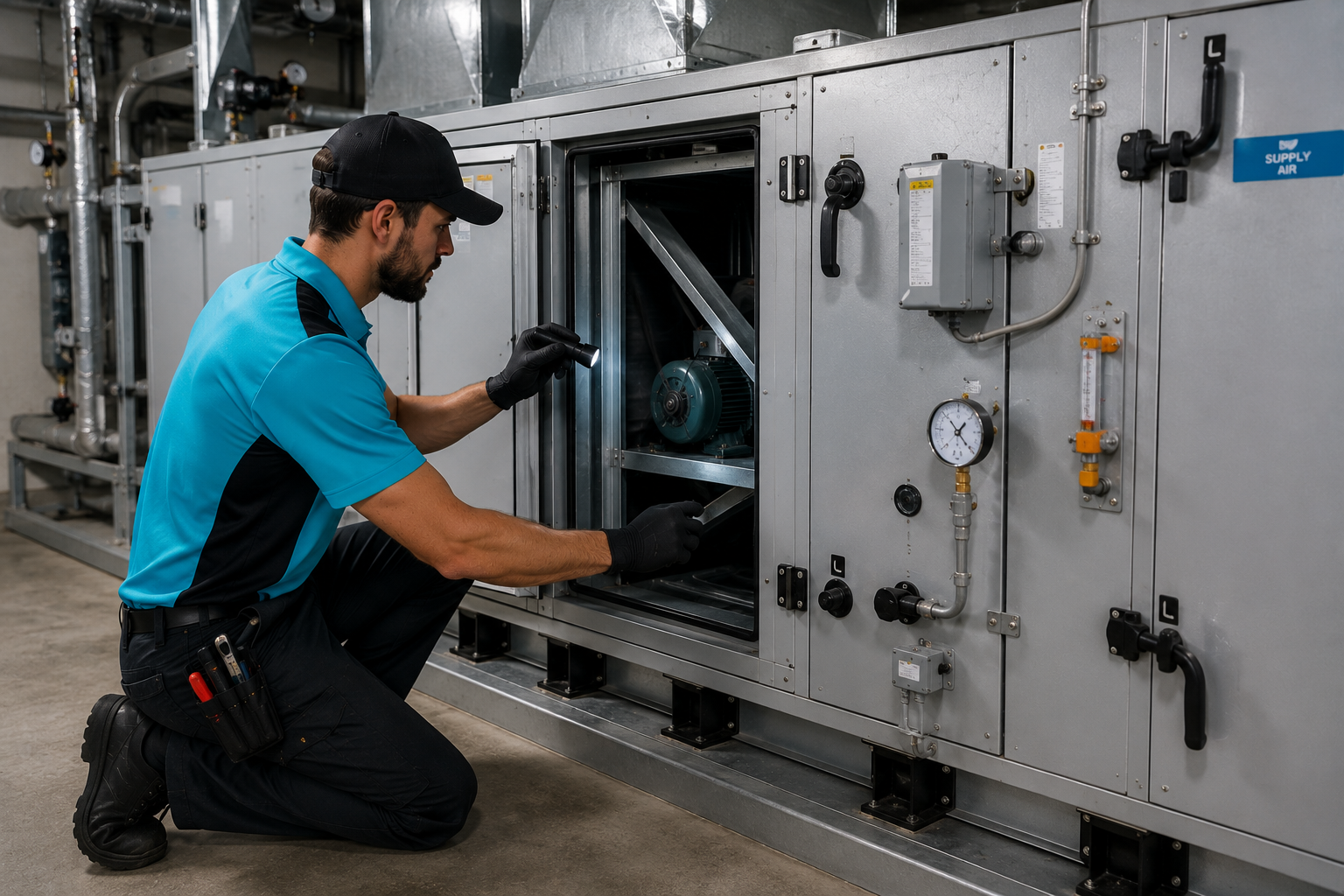 Commercial HVAC systems play an important role in keeping Perth businesses comfortable and operational. DA19 HVAC maintenance provides useful guidance for planning and managing the maintenance of heating, ventilation, air conditioning and refrigeration systems.
Regular maintenance can help businesses identify equipment problems early. It can also support reliable operation, energy efficiency and better indoor conditions.
For facility managers and building owners, the goal is simple. Keep HVAC equipment safe, reliable and efficient.
DA19 can help provide a structured approach to achieving that goal.
Important: DA19 is an AIRAH technical application manual for HVAC&R maintenance. It is not a standalone law or building regulation. Businesses should also consider the National Construction Code, applicable Australian Standards, manufacturer requirements and other relevant obligations.
What Is DA19?
DA19 is an AIRAH technical manual focused on HVAC&R maintenance.
It provides guidance for maintaining heating, ventilation, air conditioning and refrigeration systems. The manual covers maintenance planning, maintenance strategies, operation, risk based maintenance, smart maintenance and continuous improvement.
The guidance can help facility managers create a more organised maintenance program.
Instead of waiting for equipment to fail, businesses can plan inspections and servicing around the needs of their building and equipment.
This approach can help reduce avoidable problems and improve long term equipment performance.
Why Does DA19 HVAC Maintenance Matter?
Commercial HVAC equipment contains many components.
These include:
- Filters
- Coils
- Fans
- Motors
- Dampers
- Controls
- Ductwork
- Compressors
- Pumps
- Electrical component
Each component contributes to system performance.
When one component develops a problem, it can affect the rest of the system.
For example, a dirty filter can restrict airflow. A dirty coil can reduce heat transfer. A faulty control can cause equipment to operate when it is not needed.
Regular maintenance helps identify these issues before they become larger problems.
DA19 considers several important maintenance objectives. These include reliability, indoor air quality, comfort, asset protection, risk reduction and energy efficiency.
This broader approach makes maintenance an important part of commercial HVAC management.
What Does DA19 Cover?
DA19 covers several areas of HVAC&R maintenance.
Understanding these areas can help businesses develop a more effective maintenance program.
Maintenance Planning
Good maintenance starts with planning.
A commercial building should have a clear schedule for inspections and servicing. The schedule should reflect the type of equipment, how often it operates and the conditions around it.
For example, a system operating continuously may need more attention than equipment used for only a few hours each day.
A maintenance plan can consider:
- Equipment type
- Equipment age
- Operating hours
- Building use
- Environmental conditions
- Equipment condition
- Previous faults
- Manufacturer recommendations
This makes maintenance more organised and easier to manage.
Risk Based Maintenance
Not every HVAC system has the same level of importance.
Some buildings can tolerate a short period without cooling. Others cannot.
Hospitals, data centres and other critical facilities may depend on continuous HVAC operation.
A risk based maintenance approach helps businesses identify which equipment requires greater attention.
This can help facility managers prioritise maintenance where an equipment failure could have the greatest impact.
Scheduled Maintenance
Scheduled maintenance helps prevent important tasks from being missed.
Depending on the system, maintenance may include inspection, cleaning, testing and adjustment.
The recommended maintenance frequency can vary depending on the equipment and its operating conditions.
This is why there is no single maintenance schedule that suits every commercial building.
DA19 and Mechanical Ventilation
Mechanical ventilation is important in many commercial buildings.
Ventilation systems help manage the movement of air through a building. They can also support indoor air quality and appropriate building conditions.
However, DA19 should not be treated as the only requirement for mechanical ventilation.
The National Construction Code and relevant Australian Standards may also apply.
AS 1668.2 is an important Australian Standard covering mechanical ventilation in buildings.
The NCC also contains requirements relating to ventilation and air conditioning systems.
This distinction is important.
DA19 provides maintenance guidance.
The NCC sets mandatory building requirements where applicable.
Australian Standards provide technical requirements and guidance.
Therefore, businesses should consider all relevant requirements when managing commercial HVAC systems.
DA19, NCC and Australian Standards
These terms can be confusing.
They do not all serve the same purpose.
DA19
Provides HVAC&R maintenance guidance.
NCC
Sets mandatory building requirements where applicable.
AS 1668.2
Covers mechanical ventilation in buildings.
AS/NZS 3666
Addresses microbial control associated with air handling and water systems.
Manufacturer instructions
Provide equipment specific maintenance requirements.
Understanding the difference can help facility managers plan maintenance more effectively.
It also helps prevent businesses from assuming that following one document automatically satisfies every requirement.
For specific compliance questions, businesses should obtain advice from an appropriately qualified professional.
What Should Commercial HVAC Maintenance Include?
A good maintenance program should cover the main components of the HVAC system.
The exact tasks will depend on the equipment and building.
However, common maintenance areas include the following.
Check Air Filters
Filters collect dust and airborne particles.
Over time, they can become dirty and restrict airflow.
Regular inspection can help identify blocked or damaged filters.
The required inspection frequency will depend on the building and operating environment.
Clean HVAC Coils
Coils transfer heat as part of the cooling and heating process.
Dirt and debris can reduce their performance.
Cleaning coils when required can help maintain effective heat transfer and system performance.
Inspect Fans and Motors
Fans move air through the HVAC system.
Motors drive the fans and other equipment.
Technicians should check for unusual noise, vibration, wear and other signs of problems.
Check Dampers
Dampers control airflow within some commercial HVAC systems.
Poor damper operation can affect airflow and ventilation.
Dampers should therefore be inspected as part of an appropriate maintenance program.
Check Controls and Sensors
Modern HVAC systems often rely on controls and sensors.
These components help regulate temperature, operating schedules and equipment performance.
Faulty controls can cause comfort problems or unnecessary equipment operation.
Inspect Ductwork
Ductwork distributes air throughout the building.
Accessible ductwork should be checked for damage, deterioration and other issues that may affect system performance.
Check Condensate Drains
Air conditioning systems produce condensate during operation.
The water needs to drain correctly.
Blocked drains can lead to leaks and water damage.
Inspect Electrical Components
Electrical components are an important part of commercial HVAC systems.
Relevant electrical inspections and work should be performed by appropriately licensed personnel within their authorised scope.
Check Refrigeration Components
Commercial HVAC and refrigeration systems depend on correctly operating refrigeration components.
Technicians should check system performance and look for signs of faults or leakage.
Refrigeration work should be performed by appropriately qualified professionals.
How Maintenance Supports HVAC Reliability
Unexpected HVAC failures can disrupt normal business operations.
A failed system can affect:
- Employees
- Customers
- Tenants
- Equipment
- Temperature sensitive areas
- Business productivity
Preventative maintenance takes a different approach.
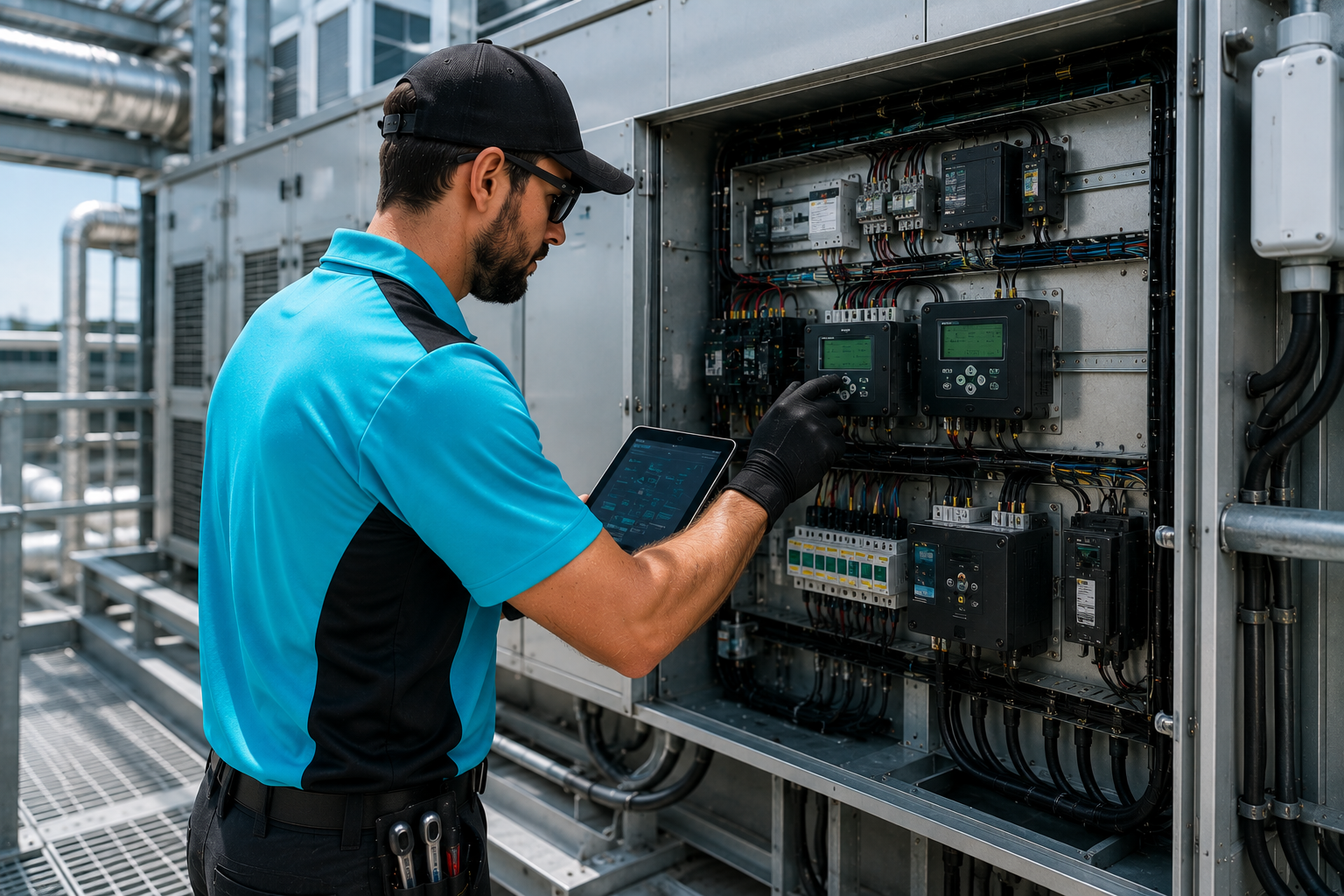
Instead of waiting for a failure, technicians inspect equipment and identify developing problems.
For example, maintenance may identify a worn fan belt before it fails. It may also identify dirty coils, blocked drains or control problems.
Addressing these issues early can help reduce the risk of unexpected breakdowns.
Reliability and risk reduction are important objectives within a structured HVAC&R maintenance program.
Can Maintenance Improve HVAC Efficiency?
Yes.
Poorly maintained equipment can become less efficient.
For example, dirty filters can restrict airflow. Dirty coils can affect heat transfer. Faulty controls can also cause equipment to run unnecessarily.
Regular maintenance can help identify these problems.
It can also provide an opportunity to review:
- Operating schedules
- Temperature settings
- Airflow
- Equipment performance
- Control settings
- Component condition
However, maintenance is only one part of energy efficiency.
An older HVAC system may still consume significant energy even when it is well maintained.
In these situations, a professional assessment can help determine whether equipment upgrades or control improvements should be considered.
DA19 and Smart HVAC Maintenance
Technology is changing the way commercial HVAC systems are maintained.
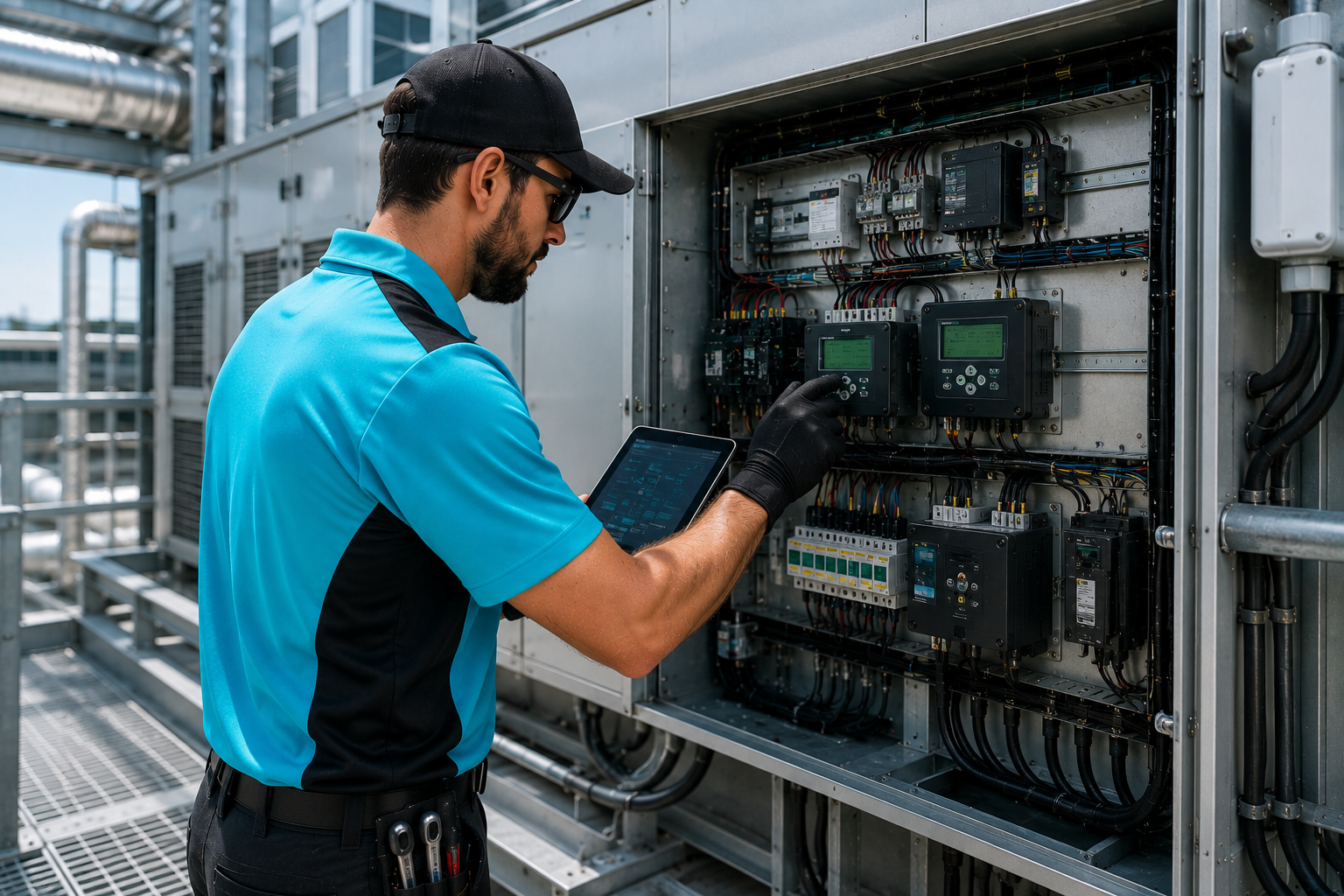
Modern buildings can use controls and building management systems to monitor HVAC equipment and building conditions.
DA19 also recognises smart maintenance and the growing role of digital technology in maintenance management.
BMS technology can provide useful information about:
- Equipment operation
- Temperature
- Operating schedules
- Fault conditions
- Energy consumption
- System performance
This information can help facility managers identify unusual conditions.
It can also support better maintenance decisions.
For larger commercial buildings, combining professional maintenance with appropriate monitoring technology can provide a more complete approach to HVAC management.
How Often Should HVAC Systems Be Maintained?
There is no single maintenance frequency for every commercial HVAC system.
The right schedule depends on the equipment and the building.
Important factors include:
• Equipment type
• Manufacturer recommendations
• Operating hours
• Building use
• Environmental conditions
• Equipment age
• System condition
• System criticality
For example, equipment operating in a dusty environment may require more frequent attention.
A critical HVAC system may also require a more detailed maintenance program.
The best approach is to develop a maintenance schedule based on the actual needs of the building.
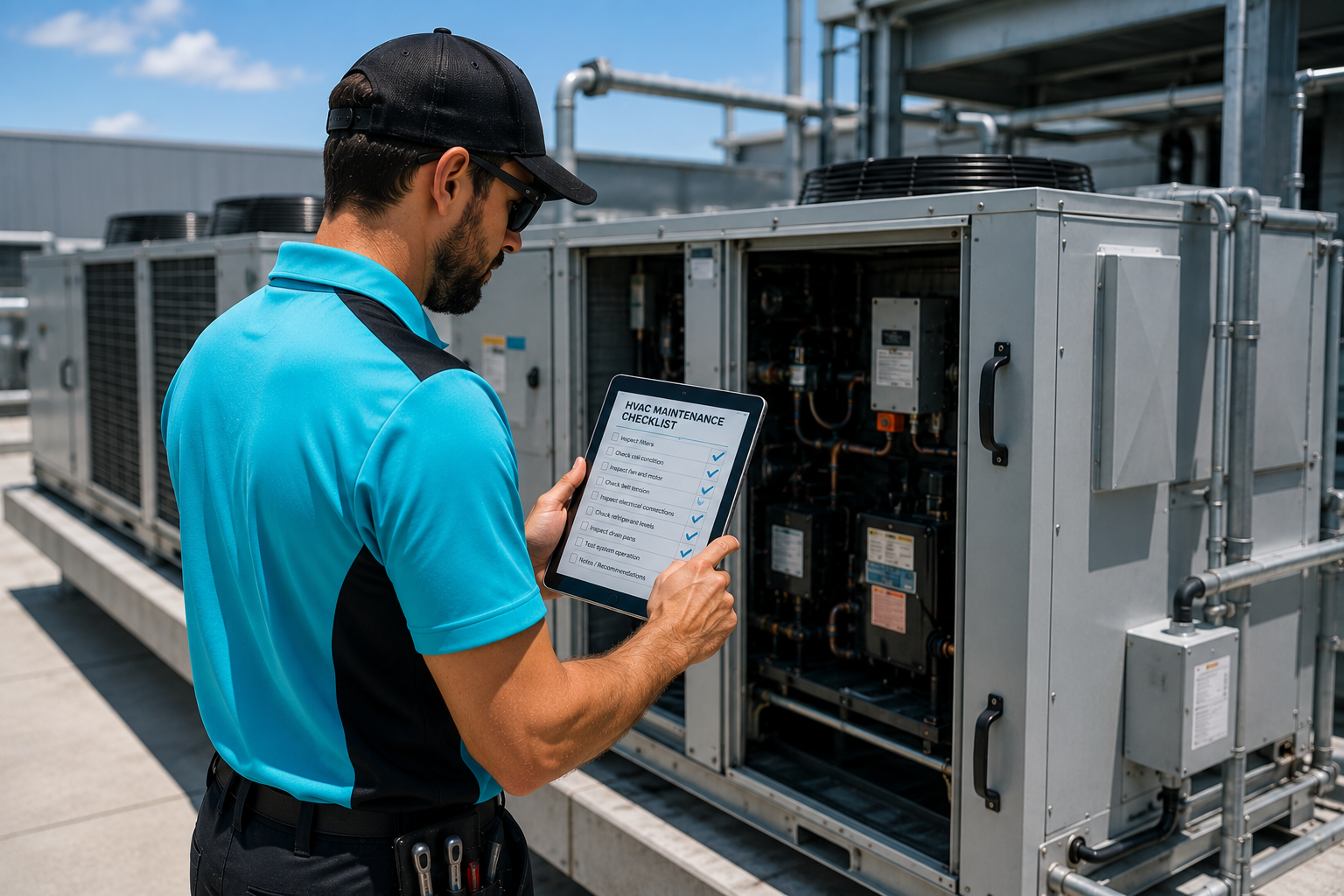
Download the Free Commercial HVAC Maintenance Checklist
Planning HVAC maintenance does not need to be complicated.
We’ve created a practical Commercial HVAC Maintenance Checklist for Perth Businesses to help facility managers organise important maintenance checks.
The checklist covers areas such as:
- Filters
- Airflow
- Coils
- Fans
- Refrigeration
- Controls
- Drainage
- Energy performance
- Maintenance records
DOWNLOAD THE CHECKLIST
Use the checklist as a planning tool alongside manufacturer requirements and your professional HVAC maintenance program.
When Should You Review Your HVAC Maintenance Plan?
Your maintenance plan should change when your building or equipment changes.
Consider reviewing your maintenance program when:
- New HVAC equipment is installed
- Building occupancy changes
- Operating hours increase
- Equipment develops repeated faults
- Energy use increases
- Building use changes
- Major renovations take place
- New controls or BMS technology is installed
Regular reviews can help keep the maintenance program relevant.
A continuous improvement approach can also help businesses identify opportunities to improve HVAC performance over time.
Protect Your Commercial HVAC Investment
Commercial HVAC equipment represents a significant investment.
Regular maintenance can help protect that investment.
It can also support reliable operation, better indoor conditions and efficient system performance.
DA19 provides useful guidance for businesses that want a structured approach to HVAC&R maintenance.
However, it should be considered alongside the NCC, relevant Australian Standards, manufacturer requirements and other applicable obligations.
For Perth businesses, professional commercial HVAC maintenance can help identify problems early and keep critical equipment operating reliably.
Efficient Refrigeration & HVAC provides commercial HVAC and refrigeration services across Perth and Western Australia.
If your business depends on reliable heating, cooling or ventilation, contact our team to discuss a maintenance program suited to your equipment and facility.